


Last week offered a unique vantage point on America—both politically and personally.
On Election Night, I was in Washington, D.C., speaking the next day at a manufacturing conference, surrounded by leaders focused on strengthening the industrial base. The next morning, I traveled to New York City for five days of panels and conversations centered on veterans, entrepreneurship, and the transition from service to civilian life.
Experiencing both cities—D.C. at the heart of policymaking and New York in the days after their high-stakes election—reminded me just how much our nation depends on finding balance in times of turbulence.
The Politicization of the Military
As an Army veteran, I am often asked whether my fellow military and veteran colleagues are concerned about the politicization of our armed forces. The short answer: yes, but I’m also hopeful.
It’s easy to blur patriotism and partisanship. Yet when our troops are used as pawns in political games, we all lose. The pendulum has swung sharply in recent years—Bush to Obama to Trump, to Biden, and back again—and it will only stabilize if we hold the center.
I was encouraged at the NDIA Conference by comments from Jen Stewart, a national security and policy expert who’s served both on Capitol Hill and at the Pentagon. She believes there’s still a core of bipartisan leadership in Congress—people genuinely committed to governing—that can resist the wild swings of the pendulum when it comes to our national security, especially around the innovation needed to meet tomorrow’s threats. I share that optimism.
From Service to Startup
In New York, the focus shifted from politics to progress. At a veterans and entrepreneurship conference sponsored by the Bob Woodruff Foundation, the conversation wasn’t about elections or party lines—it was about building.
Veterans discussed launching companies, creating jobs, and shaping communities. I shared three lessons with the community in attendance:
Be the change you want to see.
Take big risks.
Believe in your potential.
It’s a powerful reminder that the best way to move forward is not by arguing from the sidelines but by building something worth defending.
The Machinery of New York
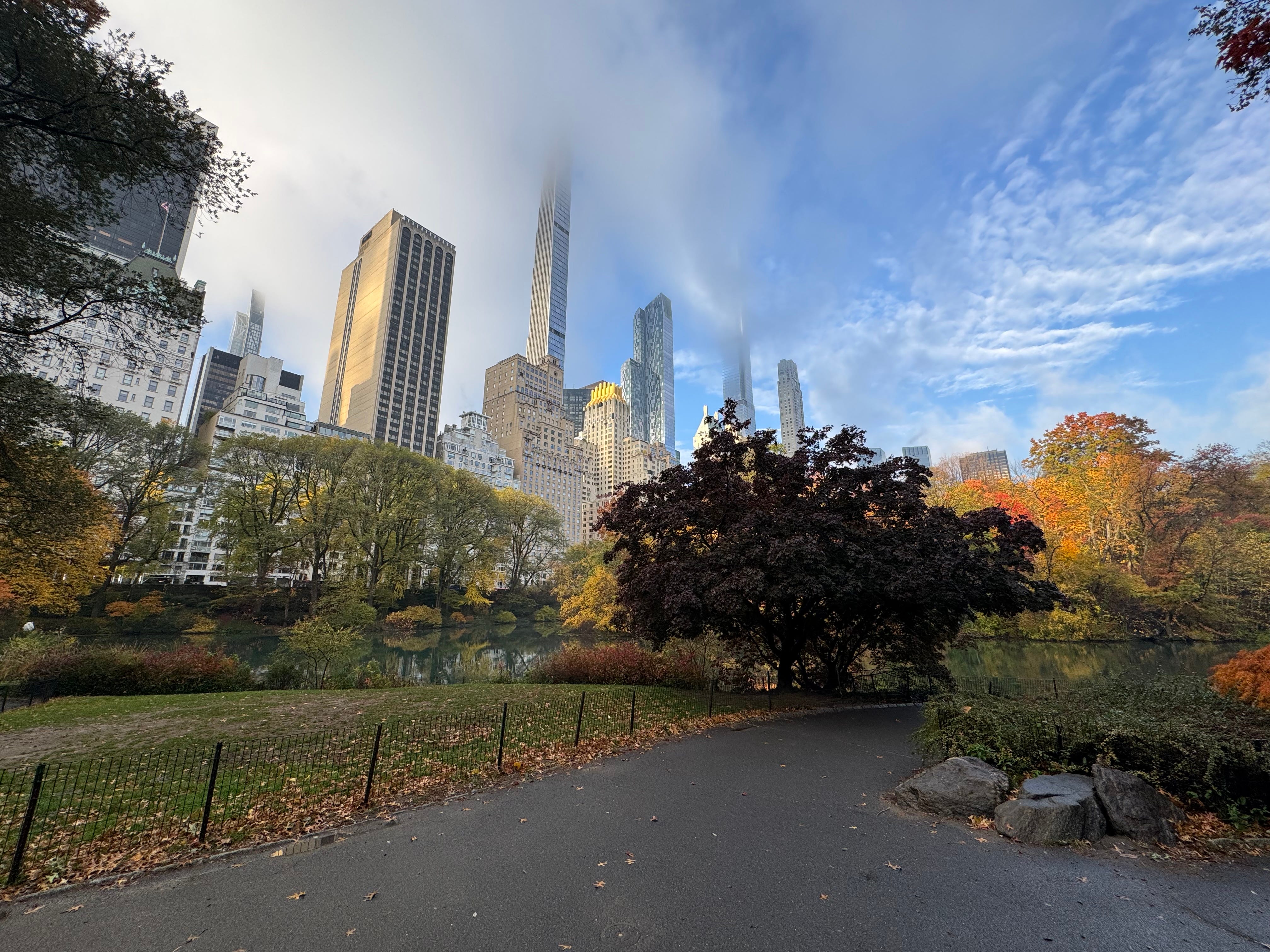
During my time in New York, I was struck again by the sheer scale of the city—the operating systems that keep it moving: subways, sanitation, commerce, restaurants, even the street sweepers at dawn.
New York endures. It always has.
Despite the political rhetoric surrounding its leadership, the city’s complexity and momentum make it resilient. Ironically, the loudest critics often have the greatest means to “vote with their feet,” but New York’s story has always been one of endurance and reinvention.
Echoes of 1929
While walking all through the city in places like Central Park and down past the Empire State Building, I spent 5 days listening to 1929 by Andrew Ross Sorkin —the same author of The Big Short.
It was eerie how familiar it all felt. The unchecked speculation, the promises of something for nothing, the belief that growth can defy gravity. Whether it’s margin calls in 1929 or sports betting apps today, the pattern repeats: risk, reward, and reckoning. I don’t mind people risking big money as long as they don’t expect the taxpayers to come and bail them out.
I’ll always believe that those who build real things—machines, systems, companies, communities—should be rewarded more than those who simply move money around. A nation that invests in builders, not just brokers, is a nation prepared for the future. It reminded me of a great Freakonomics podcast, “China is run by Engineers, America is run by lawyers.” It’s definitely worth a listen.
The stories of the past and our lives today
In one of those moments when the universe seems to wink at us, I came across a story in the book 1929 that felt almost fated. Sorkin describes how President Hoover urged President Elect Franklin D. Roosevelt to help Americans understand that consumer sentiment often matters more than the hard facts of the economy’s strength. He also notes that the night before his 1933 inauguration, FDR stayed at the Mayflower Hotel in Washington, D.C.
Just four days earlier, I had stayed there myself. Before checking out for my trip to New York, I wandered through the hotel on a self-guided tour. That’s when I learned that FDR had made a last-minute, handwritten change to his inaugural address—adding the now-famous line: “The only thing we have to fear is fear itself.”
Right there, in that very hotel—the Mayflower.
Builders of a Better Future
As the week closed, I was heartened to hear that Stacey Blakely has been named the new Executive Director of the Builders Movement—a coalition focused on bridging divides and restoring civic faith.
As someone who grew up in small-town Texas, I know she’ll bring the kind of practical optimism we need right now: less “us versus them,” and more “how do we build together?”
Because in the end, whether in Washington or New York—or anywhere between—America endures because we build.
Let me know what you are seeing out there.
Take care,
Joseph
Co-Founder of USTomorrow
I encourage you to click here for more on Linkedin , X-Twitter, Instagram, Bluesky, Medium, and Facebook.