


Admiral Bobby Inman, who ran the NSA and the CIA and then came home and helped put Austin on the technology map, died this week at 95.
Since I heard the news, I’ve been going back through a decade of emails, calendar invites and photos, and I keep landing on the same thing. A man who led two of the nation’s top intelligence agencies always seemed to have time for others, me included. I want to tell you about him, and about what that kind of generosity looks like up close.
A Texas kid who finished UT at 19
He was born in 1931 in Rhonesboro, Texas (a tiny dot on the East Texas map). He graduated from the University of Texas at 19 and joined the Navy in 1951. He went on to serve as Director of the National Security Agency under President Carter and as Deputy Director of the CIA under President Reagan, and he retired as a four-star admiral in 1982.
Most people would’ve stopped there. He came home to Texas and started a second career.
The bet that put Austin on the map
In 1983 he was leading the Microelectronics and Computer Technology Corporation, MCC, when it picked Austin for its headquarters over dozens of other cities. That decision helped draw Sematech here too, and a lot of what Austin’s tech economy became traces back to it. He joined the UT faculty in 1987, twice served as interim dean of the LBJ School, and kept teaching until 2021, when he was 90.
In 2024 the Austin Technology Council put him in the first “Legacy and Foundational” class of the Austin Tech Hall of Fame. I was in the room that night celebrating my own mentors, and I’m so glad I got to cheer for him. Thom Singer, ATC’s CEO, put it well in this morning’s ATC newsletter: “Your legacy is woven into the story of Austin.”
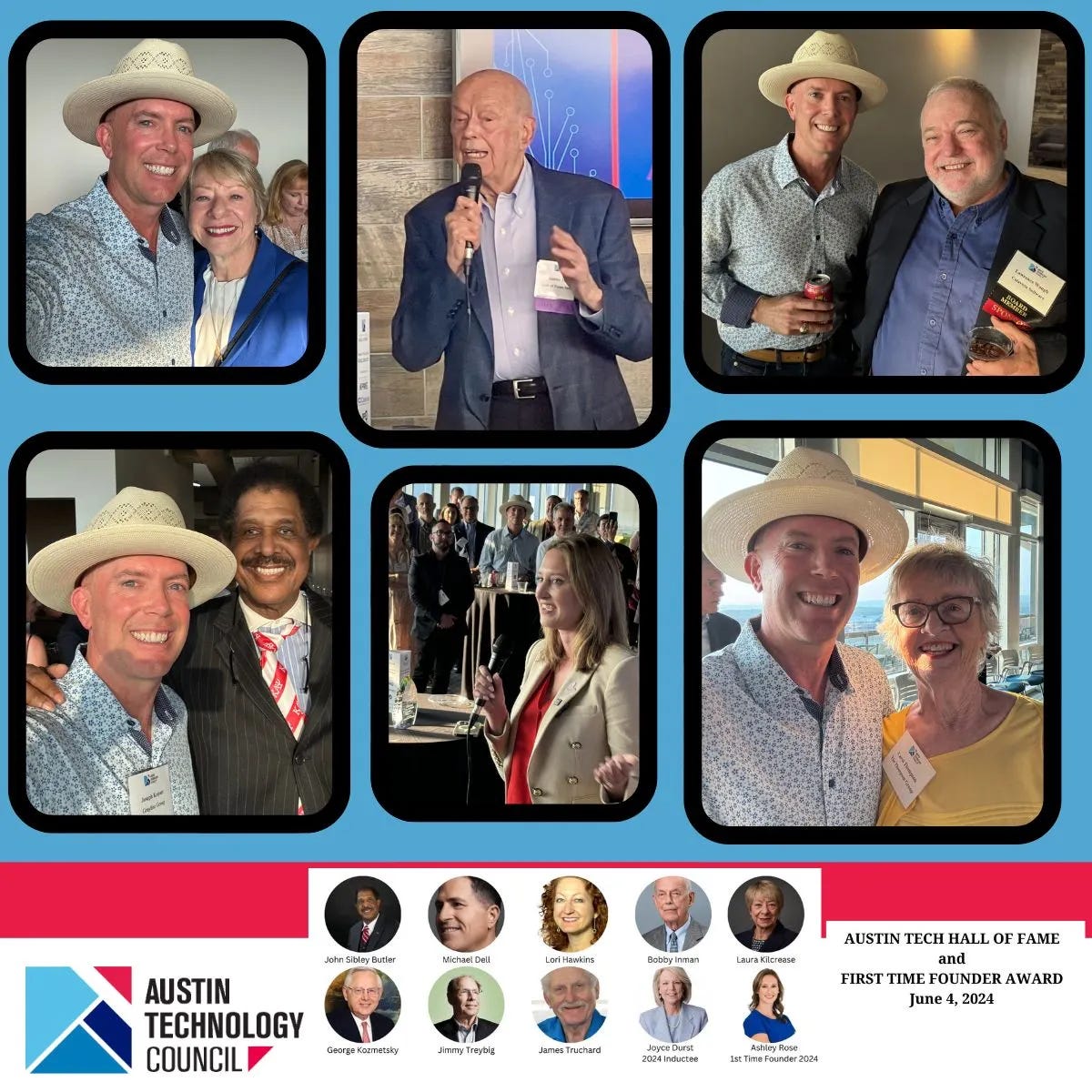
From the back of a classroom to the Admiral
When I got to Austin in 2011 to lead Army ROTC at UT, I didn’t speak the language of business yet. John Sibley Butler, a fellow veteran, let me audit his class at McCombs so I could learn it. Then he sent me to Laura Kilcrease, the godmother of the Austin tech scene, and Laura introduced me to the Admiral. (I wrote about that chain of mentors back in 2024, and I’d write it again tomorrow.)
I’ve told a lot of young veterans since then that “people will be what they can see.” He was one of the people I could see. And it was everything I wanted to be going from military service to public service to private sector. He did it all. With class.
The day the Pentagon came to Capital Factory
In September 2016, the late, great Ash Carter came to Capital Factory as Secretary of Defense to open the Pentagon’s DIUx office in Austin. When his team asked who should be in the room, I gave them Bobby’s name. Two days before the event, he wrote to say he’d gotten an invitation to a different event that week but nothing for this one. So I chased it down with the organizers.
He came. And made a real impact on the SecDef as he told the story of the last time the Austin was asked to step up in the innovation of our National Security.
The next day I sent him a one-line note saying how great it was to see him at the SecDef event. The man who brought MCC to Austin in 1983 was standing in the room the day the Department of Defense opened its innovation office here, and I still smile about that. All trails lead back to Bob Inman.
An offer before his flight
A month later I asked him for a favor. An Army friend I’d known for almost 30 years was retiring and deciding between Austin and the East Coast, and I asked the Admiral to share “the Austin you know” with him. He wrote back that his only window was early on the 18th, since he had to leave his house by 10:00 to catch a flight. He offered it anyway.
I told him I wasn’t going to take his travel morning and that I’d bring my friend back another time. But I never forgot that he offered. He was that kind of person. No matter how busy, he was not afraid to take time to share his wisdom.
A no that still felt like a yes
In 2017, when I was exploring a run for Congress, I asked for his support. His answer:
“This is a hard one for me, given my great admiration of you. But I have a longstanding commitment to Lamar Smith that I am not prepared to walk away from.”
I wrote back that I respected loyalty of every kind, and I meant it. He told me exactly where he stood, and he told me kindly. (I’ve tried to say no that way ever since.)
That is the way politics are supposed to be. Personal. Connected to real people and far less about the party.
Signed, Bob
That was the thing about his emails. They came from his iPad, they were usually two lines long, and they were signed “Bob.”
In September 2020, in the middle of a pandemic, he put a half hour on his calendar for the two of us. When I reached out in 2022 about a startup I was helping, he told me that when he turned 90 he’d decided to stop investing in anything new. (I told him he’d certainly earned it.) And in 2023, at 92, he was still asking me whether I’d run again.
I always felt a kind of fatherly mentorship every time we had a chance to catch up.
Leaving the field to us
In April 2023 I sent him one of my USTomorrow newsletters about getting to know the names of your neighbors. Even despite all of the political division in America, he remained independent. He wrote back:
“As a political independent I feel pretty isolated these days. At 92 I have receded to the sidelines, leaving the field to you young guys.”
He never really sat on the sidelines, though. After he retired from teaching he gave monthly intelligence briefings to his neighbors at Querencia. Rich Oppel, the former Statesman editor who knew him for decades, told the paper this week, “You would think that he was reading from the daily CIA briefing of the president, but he wasn’t.”
But he was right that the field belongs to the next generation now, and the best way I know to honor him is to do for the next young warfighter, founder or student what he did for me. So if someone asks you for thirty minutes this week, give it to them, even if it’s the morning you’re flying out.
Thank you, Admiral. Rest easy. We’ve got it from here.
My condolences to Tom and the entire Inman family.
If the Admiral made time for you too, tell me about it. I read every one.
Take care,
Joseph
Joseph Kopser
Co-Founder, USTomorrow.us
P.S. If you never heard him tell the story of how MCC picked Austin, Thom Singer’s 2024 Austin Tech Connect interview with the Admiral is the best hour you’ll spend this weekend. ATC re-posted it this week.
Joseph Kopser is a lifelong problem solver committed to building the teams needed to take on our toughest challenges. He is currently President of Grayline after he co-founded and served as CEO of RideScout, before it was acquired by Mercedes. He served in the U.S. Army for 20 years earning the Combat Action Badge, Army Ranger Tab and Bronze Star. He is a graduate of West Point with a BS in Aerospace Engineering and also received a Masters from the Harvard Kennedy School and former member of the Army Science Board. He was recognized as a White House Champion of Change for his efforts in Energy and Transportation as well as won the U.S. DOT Data Innovation Award. He co-authored the book, Catalyst, a book focused on helping teams adapt to change. He is the Chair of the Board of Advisors for the CleanTX, an economic development and professional association for energy innovation. In 2025, Joseph was selected for the Texas Business Hall of Fame Future Texas Business Legend Award. Joseph and his wife of 32 years, Amy, live in Austin and they are extremely proud of their three adult daughters living their best lives.