


This weekend, Amy and I stepped off the hamster wheel for a few days just outside of Fredericksburg — starting the trip the right way: splitting what might have been the biggest, best chicken fried steak I’ve ever eaten at The Country Cupboard. Locally owned and operated for over 40 years in Johnson City, it's about as Americana as you can get.
After checking into our place, though I’m normally a beer guy, I found myself under the shade of an old oak tree, enjoying a glass of wine from Perdonales Cellars, and just taking it all in — the quiet, the natural beauty, the wide-open Hill Country sky. But the quiet didn’t last too long as the Friday wine tasting crowds started to show up.
One of my favorite pastimes in places like this is just sitting back and listening — what I call a little "ear-hustling." All around you at these wineries, restaurants, and beer gardens-- wherever people gather-- are conversations floating through the air: loud talkers telling stories, couples laughing at inside jokes, friends gossiping about hometown news. No matter where you sit or what your background is, there's something universal about it — that very human urge to connect, to share, to be heard. It’s a reminder that whether you're in boots, high heels, or flip flops, we all have far more in common than that which separates us.
And then there's the pure entertainment of people-watching. One moment we were visiting a high end bar with a mixologist and then not much later, we were sitting near a group of eighteen sun-drenched wine-tasters who had fully embraced the spirit of Fredericksburg — and the surrounding wine country. Two very different corners of the world, two different kinds of celebration — but the same human impulse for community, laughter, and life. Luckily, the subject of politics never came up in any of the conversations surrounding us all day. Just people enjoying the commonality that is being human.
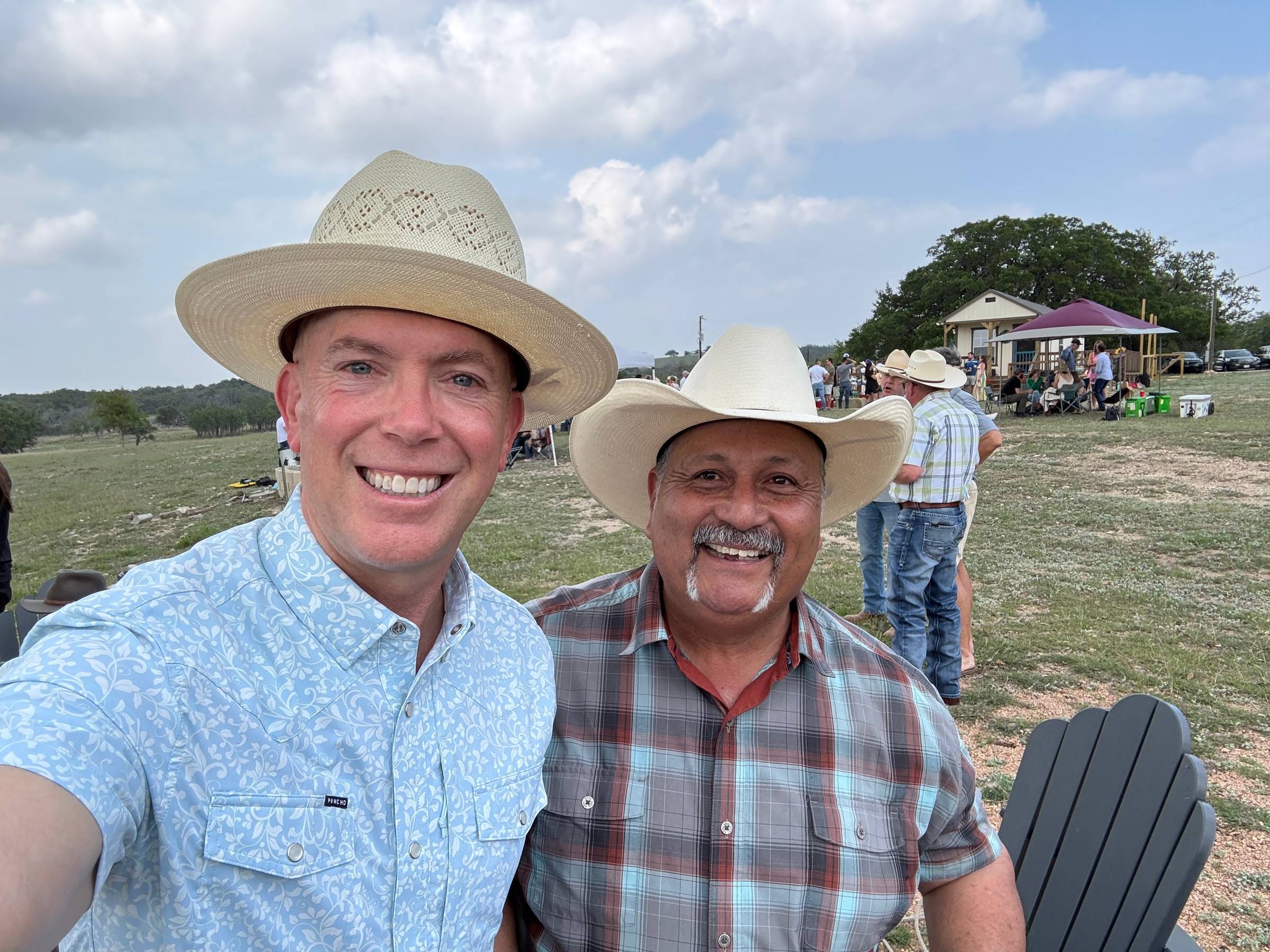
As we drove around the Hill Country, I kept noticing another theme: the constant balance between beauty and hardship. It's easy to get caught up in the rolling views — a sunrise breaking over oak-covered hills, a long valley stretching into the distance. But that same landscape once meant a daily fight for survival for those who lived here centuries ago. Enduring harsh seasons, coaxing food from rocky soil, navigating isolation — it took a special resilience. A balance between the land, the people who worked it, and the animals that sustained them. I learned a lot talking with Felix (pictured above) who grew up in Stonewall left to serve in the Army and then returned to work the ranches in the area. In fact, his dad worked the LBJ ranch nearly his whole life and his story was turned into a book about and Lady Bird Johnson.
In many ways, it's a reflection of the greater American experience: always navigating trade-offs between enjoying our natural resources and consuming them, between the fierce independence of the pioneer spirit and the collective effort needed to build a future. It’s the spirit that brought electricity to these rural areas when Congressman — and later Senator — Lyndon B. Johnson worked to bring power to the Hill Country by damming rivers and creeks, changing the land forever in the name of progress.
Would we even allow it today — flooding ranches and homesteads to power a new economy?
That pattern continues today. Growth brings new life — new ideas, new economies — but it also brings strain. Every charming street draws more visitors. Every thriving town wrestles with traffic, housing, schools, and water needs. As the former Speaker of the Texas House once said, “I don’t mind there being more people — I just want them to bring clean water, more concrete, and school teachers.”
The people who thrive are the ones who can adapt to change without losing their roots. Those who can manage the tension between growth and tradition, new ideas and timeless values. It’s the extremes — those who want zero change, or those who want change too fast without the resources to support it — who cause the biggest problems.
At the end of the day, the reminder comes full circle: a backyard lamb roast with friends, honoring Greek ancestors, the German Hill Country traditions, and a drinking beer with a Tejano rancher, set against the backdrop of a rusted old trailer and a live band playing music that could have come from this year, or a hundred years ago. You can’t get more melting pot than that.
That’s the great American tradition — the never-perfect but always hopeful balance between progress and heritage, between building a better life and honoring the one that came before. If we keep working together, imperfect as we are, we can still build a better USTomorrow.
Let me know the traditions you have that keep you rooted as you plan for the the future? What's the best way of inviting new faces and integrating new voices? What's important to keep and what needs updating?
Take care,
Joseph
Joseph Kopser
Co-Founder of USTomorrow
P.S On a personal note, if you know anyone impacted by cuts or layoffs, or anyone you know looking to transition from one stage in life to another please share with them my post.
As always, if you enjoy this conversation, please forward to friends and encourage them to join on and share their perspective.
I encourage you to click here for more on USTomorrow Blogs, Linkedin , X-Twitter, Instagram, Bluesky, Medium, and Facebook.