


Last week we hosted a Gold Star Family dinner to honor the families who have lost someone in service to country. I want to share that experience with you.
It the first night of the fourth annual Leading2Win Summit, a reception for Gold Star families at the Texas Military Forces Museum, underwritten by JPMorgan Chase. Then Glorygrace Dickinson stood up to speak for the families.
She lost her husband, SSG Michael Dickinson on July 17th, 2006. She talked about the grief that came after, the people who carried her through it, and the work she still had to do herself. Then she said she had turned her grief into purpose. That stuck with me. Turning grief into purpose.
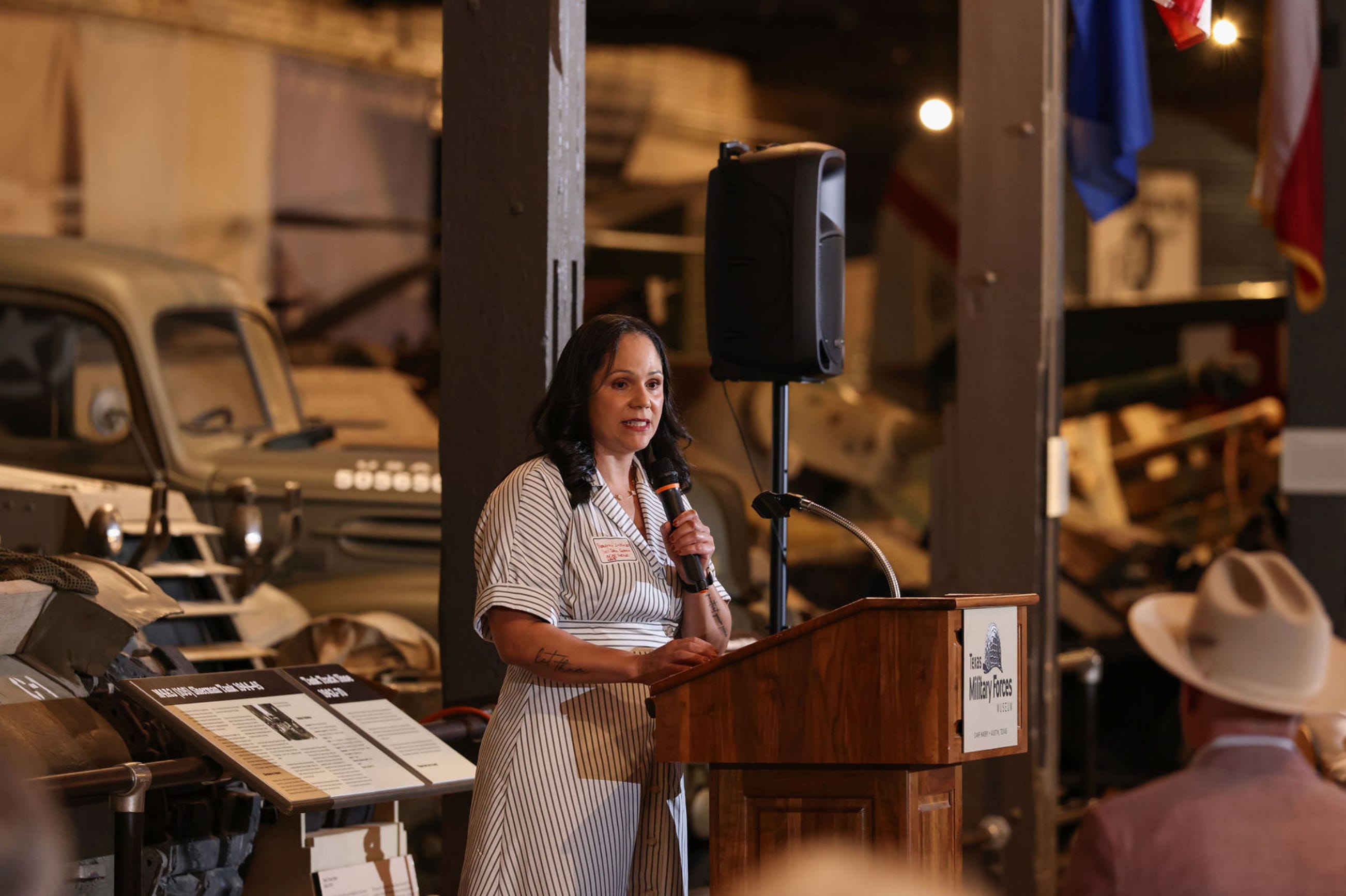
One of her many titles now is Survivor Outreach Services support coordinator. In practice that’s long-term case management for Army families after an active duty death. Benefits and counseling and financial help, a Vet Center when that’s the right call, a partnership with a behavioral health clinic or a church or a university when that’s the right call instead, and a card in the mail on the anniversaries nobody else remembers. Before that she spent four and a half years as a physical therapist assistant at Fort Sam Houston, putting Soldiers back together after surgeries and injuries. (She also went back for a human services degree while doing the survivor work. I don’t know when she found the time). Today she speaks out on the loss, but also serves as a role model for those who go through grief and find a new purpose. You can watch a brief video of her story from a USAA video here on Facebook.
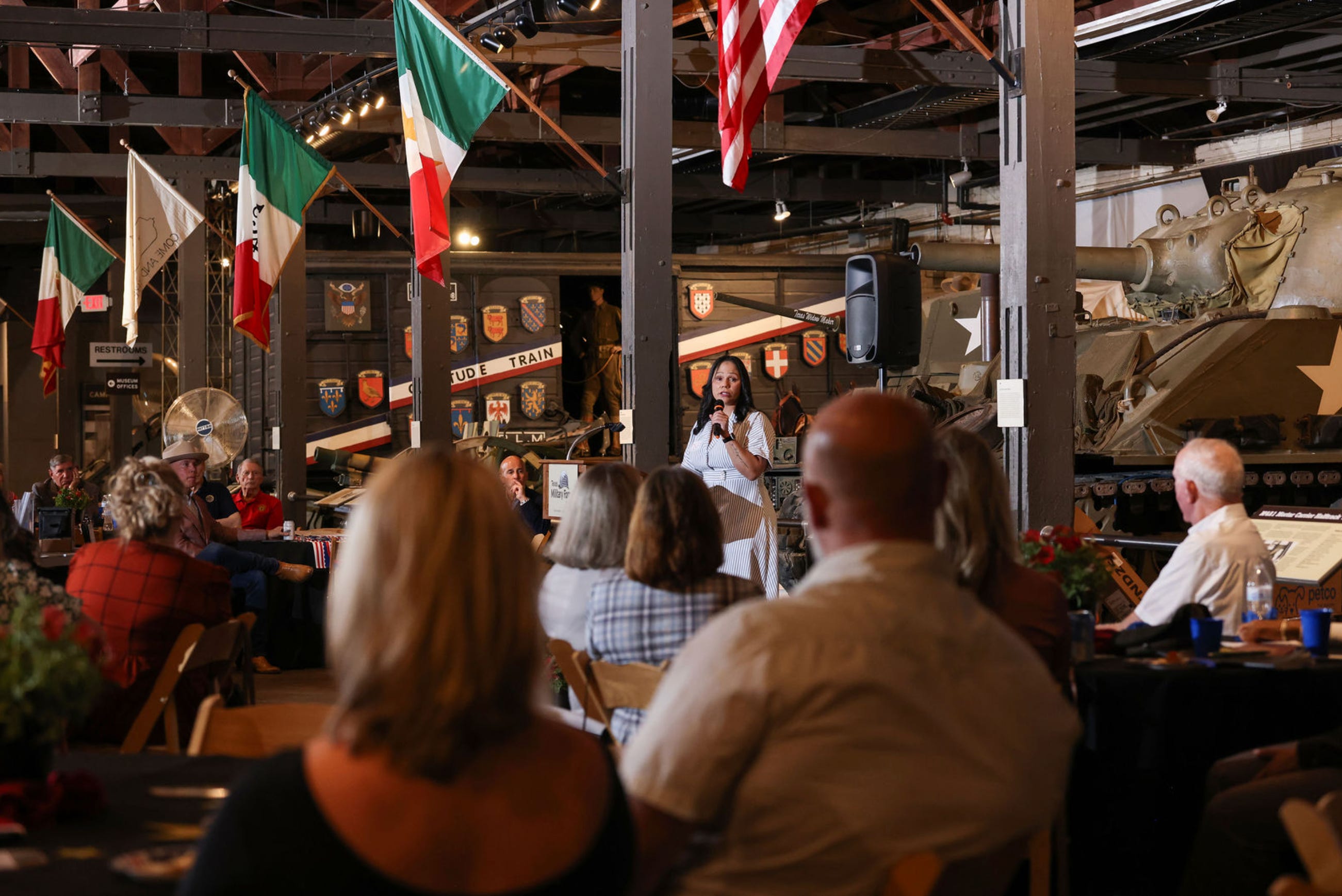
We never get to choose when tragedy strikes, but we do get to choose how we react. Glorygrace is proof of that.
Turning grief into rocket fuel
Which brings me to my friend Brian Wynne, who titled his TEDx talk exactly that.
In 2017 Brian’s brother Drew died at 31. Drew had a cold brew coffee business in Charleston, and he was stripping the floors with a product you could buy at any hardware store. The fumes killed him. Methylene chloride.
The Wynne family went to Washington instead of waiting on somebody else’s timeline, and then they kept going back. The Environmental Protection Agency pulled the chemical off consumer shelves in 2019 and banned most of its remaining uses in 2024. Ask anybody who has tried to move a federal agency how long that normally takes. As I said in an interview with him this summer, “It literally took an act of Congress! And he did it!”
A brother’s death turned into a federal rule, and then into a foundation that pays for other people’s ideas. The Drew Wynne Foundation backs entrepreneurs and small businesses, and this year it sponsored the problem and solution workshop for nonprofits at our summit, with Johanna Wynne facilitating the room herself. Brian told that story at our monthly mentorship meetup in July, and his twenty minutes on a TEDx stage are worth yours: Turning Grief into Rocket Fuel.
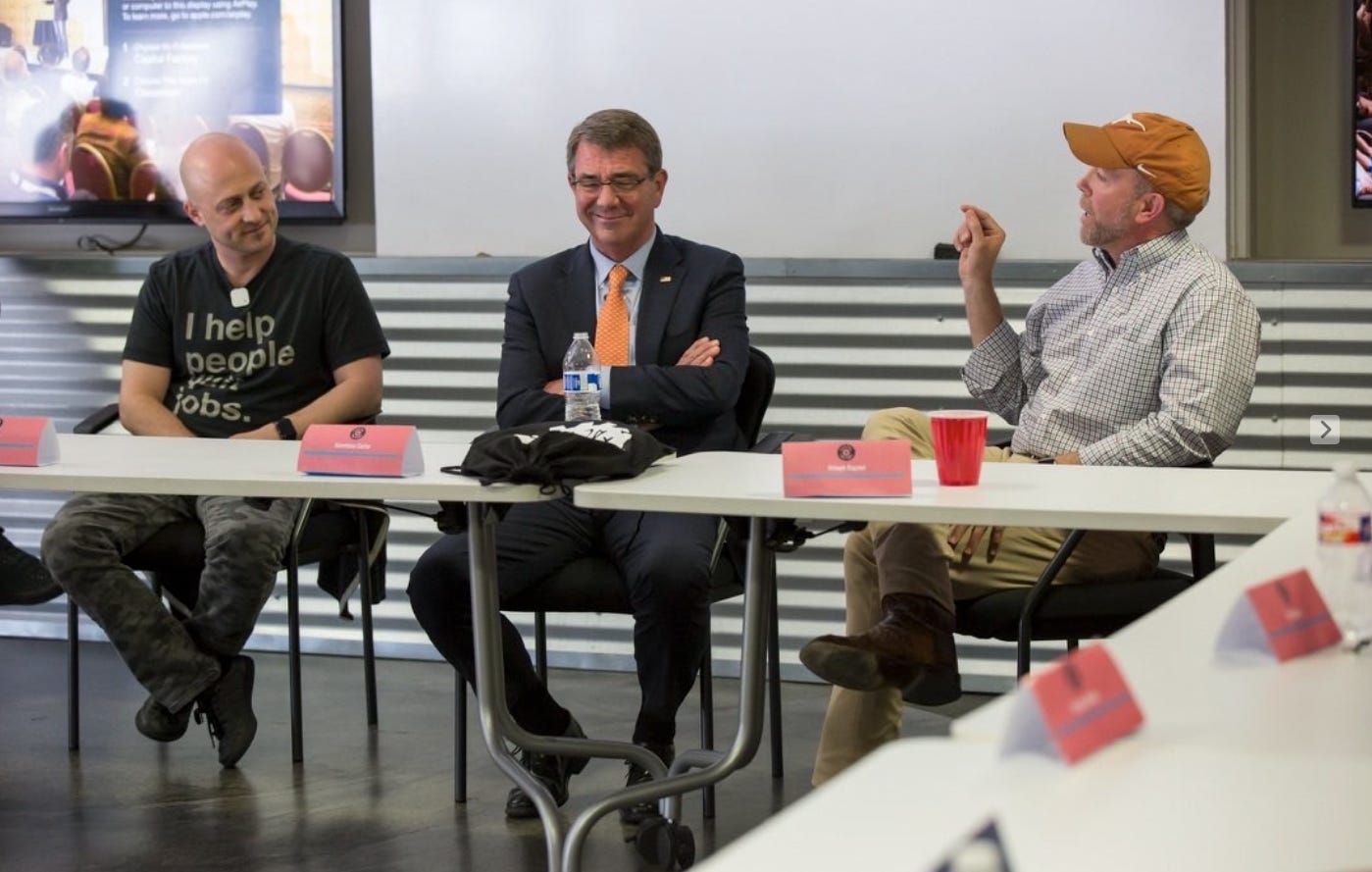
“I help people quit jobs.”
That was the shirt. If you spent any time in Austin, you saw it.
In June we lost Joshua Baer in a plane crash outside Laredo. He was 50. He co-founded Capital Factory in 2009 and spent the next seventeen years making Austin a place where a founder with nothing could still get a meeting. Patrick Hitchins, who founded LPM Lab, told KUT about asking Josh what still excited him after all of it. Josh looked him dead in the eye. “I just love seeing these small scrappy companies and their founders fight and win, and that’s truly what gets me excited, Pat.”
The shirt was a funny saying that doubled as a mission statement. Quitting a job is the most frightening thing most people will ever do on purpose, and he spent a career making it survivable.
He did it too when the quitting wasn’t anybody’s choice. My favorite story, one I never knew until this summer. When COVID shut down the events business and forced layoffs, Josh personally worked his network on behalf of more than 60 people until they landed somewhere new. His shirt said he helped people quit jobs. In truth, Josh helped people FIND their jobs.
That work isn’t finished, and the need is louder now than it was in 2020. Employers have announced 529,914 job cuts through August, down 41% from last year, and artificial intelligence was named in 116,175 of them, about a fifth, the single most-cited reason of 2026. Whether or not the layoff ever comes, the fear is already in the building.
And it is that fear turned to grief that people have a chance to act on.
And some do, Americans filed a record 5.67 million applications to start a business last year, and 2026 is running about 13% ahead of that pace. (Applications, not open doors.) A lot of people have stopped waiting.
I continue to be inspired by people like Glorygrace. And Brian. And Josh. All those with us and those gone from us.
That’s the work we keep coming back to here at USTomorrow, and it’s why workforce development turns up in this newsletter as often as it does. At SWIFT (Space Workforce Incubator for Texas), which we helped co-found, it looks like a rocket lab in Austin where community college students build and test real hardware for an industry that can’t hire fast enough. At Leading2Win it looks like helping a veteran, a military spouse, or a Gold Star family member find the next chapter of a life they never planned on. Different rooms, same job Josh had. Help somebody find the next thing.
My friend Daniel Morgan sent me a line in June that I keep coming back to. We are not remembered by how we died, but by how we lived.
Life will never be fair. It will never be easy all the time either. When grief shows up, the question isn’t what we do in the moment it lands, because none of us gets a vote on that part. It’s what we choose to do after. Viktor Frankl, who lost his wife and both of his parents in Nazi concentration camps and then wrote the book on finding meaning anyway, said it this way: “Everything can be taken from a man but one thing: the last of the human freedoms — to choose one’s attitude in any given set of circumstances, to choose one’s own way.”
So I’ll ask you what I’ve been asking myself since Thursday night with Glorygrace’s remarks. What’s the one thing in front of you right now that you could fix yourself, instead of waiting for somebody else to get around to it?
Hit reply and tell me. I read every one of them.
Take care,
Joseph
Co-Founder of USTomorrow
Joseph Kopser is a lifelong problem solver committed to building the teams needed to take on our toughest challenges. He is currently President of Grayline after he co-founded and served as CEO of RideScout, before it was acquired by Mercedes. He served in the U.S. Army for 20 years earning the Combat Action Badge, Army Ranger Tab and Bronze Star. He is a graduate of West Point with a BS in Aerospace Engineering and also received a Masters from the Harvard Kennedy School and former member of the Army Science Board. He was recognized as a White House Champion of Change for his efforts in Energy and Transportation as well as won the U.S. DOT Data Innovation Award. He co-authored the book, Catalyst, a book focused on helping teams adapt to change. He is the Chair of the Board of Advisors for the CleanTX, an economic development and professional association for energy innovation. In 2025, Joseph was selected for the Texas Business Hall of Fame Future Texas Business Legend Award. Joseph and his wife of 31 years, Amy, live in Austin and they are extremely proud of their three adult daughters living their best lives.