


I usually give about 24 hours after I write a piece for USTomorrow to let the ideas marinate in draft form for a while. A few months back when I wrote an Easter piece about the Pope, he died the next morning.
This Saturday, I wrote about my first hand experience with the everyday people of the Middle East in comparison to the extremist ideology that captures fanatic elements over time. Although trends in our own country give cause for concern, there is no comparison and no single government entity that has wreaked more death and destruction over a longer period of time than the Iranian Supreme Leader and their religious theocracy.
Substack tells me this email is too long for email. (I have a bunch of photos I took in the Middle East over 20 years.). If your email gets cut off, read the full piece here.
The Iranian regime we see today was born from the 1979 revolution that overthrew the Shah. (In fact, I have a close family friend that escaped Iran as a child). In his place, a theocratic system emerged—led by Ayatollah Khomeini—that gave ultimate authority not to elected leaders, but to unelected clerics. Since then, the regime has governed not in the interest of its people, but in service of preserving religious control and exporting its ideology abroad.
One of the clearest expressions of that ideology is the regime’s decades-long chant: “Death to Israel, Death to America.” These aren’t empty slogans shouted by a fringe—they are embedded in official speeches, public demonstrations, and even military parades. They’ve become guiding principles in a foreign policy rooted in confrontation, proxy warfare, and resistance to Western influence.
Since the 1980s, Iran’s Islamic Revolutionary Guard Corps (IRGC) and its Quds Force have supported and armed terrorist organizations across the region. Iran funds and trains Hezbollah in Lebanon, Hamas and Palestinian Islamic Jihad in Gaza, and the Houthis in Yemen. During the Iraq War, U.S. military intelligence repeatedly confirmed that Iranian operatives were supplying advanced IEDs (explosively formed penetrators) used to kill and maim hundreds of American troops.
More recently, Iran-backed militias have launched drone and rocket attacks on U.S. bases in Syria and Iraq, and Houthi rebels—backed by Tehran—have targeted international shipping in the Red Sea. In 2023 and 2024, intelligence reports confirmed that Iran played a significant role in equipping and enabling Hamas’s deadly October 7 attack against Israel, sparking a broader regional crisis.
These are not isolated events—they are part of a pattern. A state-driven strategy of asymmetric warfare designed to undermine the West, destabilize neighbors, and expand Tehran’s ideological reach.
With their stated goal to wipe Israel from the face of the earth, the current Iranian regime can never get access to a working nuclear weapon. I am convinced they would use it.
And yet, inside Iran, millions of everyday people—young and old—want the same things as people everywhere: safety, opportunity, and a future for their children. But they’ve been silenced by a regime more committed to ideology than to their well-being.
The Middle East is both complicated and simple at the same time
Watching the news unfold in the Middle East—from the hostage crisis in Gaza to Israel’s recent campaign to dismantle Iran’s nuclear infrastructure—reminds me just how complex, and yet how simple, this region can be to understand.
At its core, the conflict between Israel and Iran is not a war between peoples. It’s a war between a democracy that represents its citizens and a regime that represents an extremist ideology—not its people.
This week’s newsletter is longer than usual because I want to offer a lens shaped by decades of observing, living, and working in the region. For over 25 years, I’ve listened, traveled, studied, and served in the Middle East. And through all of it, I’ve come to believe that—despite their differences—people around the world share remarkably similar hopes: a good job, the dignity of purpose, education, and a better life for their children.
What stands in the way? Extremists. Those who seek power through division, not solutions.
A Graduate School Wake-Up Call
In 2000, during my time at Harvard Kennedy School, I studied the founding documents of the state of Israel with a former U.S. Ambassador, Bob Blackwill, who had several postings in the middle east. I was struck by how many people—then and now—refuse to fully acknowledge the centuries of persecution faced by Jews, culminating in the horrors of the Holocaust and the urgent need for a Jewish homeland.
I’ll never forget one lesson in class that centered on a seemingly small, yet hugely consequential word: “the.” In the aftermath of the 1967 Six-Day War, the United Nations passed Security Council Resolution 242, calling for the “withdrawal of Israeli armed forces from territories occupied in the recent conflict.” But the English version of the resolution deliberately omitted the word “the” before “territories,” creating a diplomatic gray area. The French version, however, used “des territoires occupés”—interpreted by many as “the occupied territories.” That linguistic ambiguity gave rise to drastically different interpretations: one side saw it as a call for full withdrawal from all occupied lands, while the other interpreted it to mean withdrawal from some territories as part of broader negotiations. That debate—over a single article in two languages—became a flashpoint in peace talks and a symbol of how fragile and subjective diplomacy can be when trust is low and words are everything.
As we were studying those diplomatic debates, the Second Intifada erupted in Israel and the Palestinian territories. Sparked by a controversial visit from Israeli opposition leader Ariel Sharon to the Temple Mount, the violence quickly escalated. Suicide bombings, armed clashes, and mass protests shattered any remaining momentum from the Oslo Peace Process. Iranian-backed groups and hardline factions within the Palestinian territories seized on the moment, fueling a wave of violence that derailed hopes for a two-state solution. What had felt like a chapter in a history book suddenly came right to the headlines—and reminded me that in this region, peace is never guaranteed, especially when extremists are waiting for the moment to strike. And this was before 9/11 happened.
After 9/11, I saw firsthand, along with the rest of the world, how hate-fueled extremism destroys innocent lives in the name of ideology. Studying at Harvard under terrorism expert Jessica Stern—who once interviewed Osama bin Laden in a remote cave—I saw how far extremists will go to instill fear. Her teaching was the first, very stark, warning and introduction to the evil that persists in the world of certain fanatical leaders who seek to destroy what they hate. I recommend any of her books such as ISIS: The State of Terror (2015) with J.M. Berger; Denial: A Memoir of Terror (2010), Terror in the Name of God: Why Religious Militants Kill (2004), and The Ultimate Terrorists (2001). She has also published articles on terrorism and weapons of mass destruction.
On the Ground: Iraq, Dubai, and Beyond
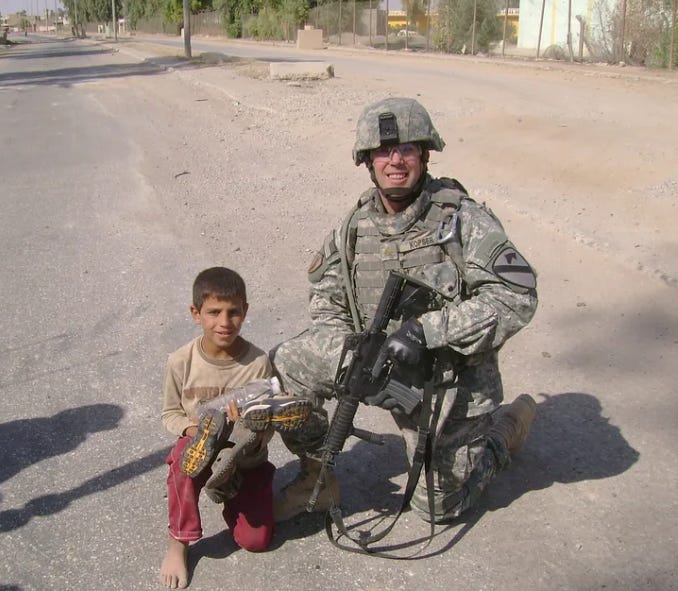
In 2004, I landed in Baghdad. What struck me most was how familiar and foreign Iraq felt at the same time. Engineers, doctors, shopkeepers—regular people who wanted what we all want: a decent job, safety for their families, and opportunity.
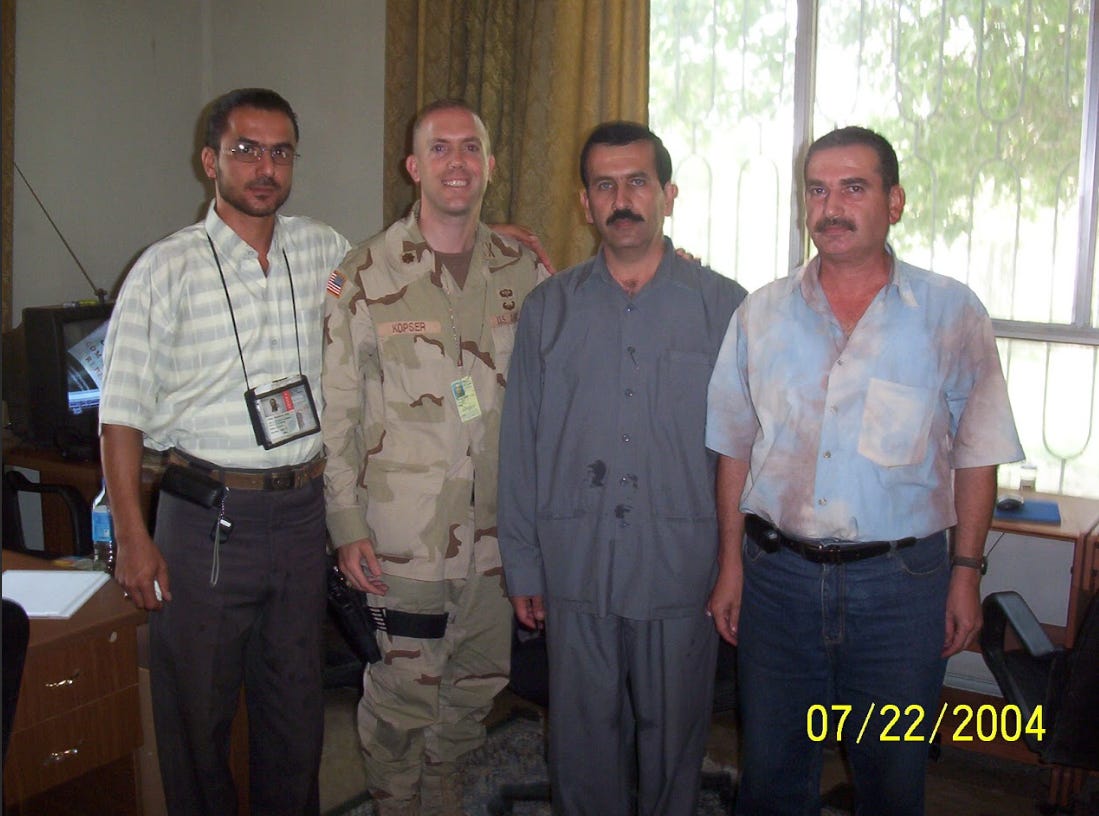
I’d studied for this deployment by reading books on regional politics, religion, and war. But in hindsight, I said this in one of my emails home– I should’ve just watched another season of The Sopranos. It’s all about power—who has it, who wants it, and what they’re willing to do to keep it. I learned first hand of the atrocities of Saddam Hussein and how far he was willing to go to preserve his power. The stories of torture still live with me. My essays home to friends and families were picked up and published in a two part series for the West Point Association of Graduates alumni magazine in 2004 as one of the first accounts of the everyday life of people and combat in the Iraq war that was just a little over a year old. You can read Part I and Part II from my accounts.

During my 14-month tour in northern Iraq near Mosul in 2006–07, I saw how factions exploited religious and political divisions. Mosul—beautiful and historic—was a playground for Saddam’s sons, Uday and Qusay, who lived in stark hypocrisy: publicly preaching morality, privately indulging in excess. The result? Chaos. Suffering. Division.
But my biggest takeaway from Iraq managed to get published in the Washington Post in an interview with Shankar Vedantam. Essentially, I tried to communicate that Saddam had been such a destructive force in the country, combined with the terror of war, it was going to take a long time for the forces of social capital from everyday Iraqis to succeed. My longterm hope is that the power of moderates to build a better society will overcome the extremists who seek to destroy.
Returning as a Civilian—and a Father
Years later, I returned to the region for work and family travel. In Dubai, I gave a speech surrounded by neon lights, high-end shopping, and evidence of capitalism on the rise—proof that peace and prosperity are possible in the region. Especially when leaders focus on building rather than destroying. Ascending to the observation deck on the 148th floor of the Burj Khalifa was evidence of the possibility of building.

Turkey: At the Crossroads of Faith, Survival, and Human Creativity
In Turkey, we visited Ephesus—a place that quite literally stands at the crossroads of Judaism, Christianity, and Islam. Walking through its remarkably preserved Roman ruins, I couldn’t help but reflect on how many thousands of pilgrims, immigrants, and families had passed through this region over the centuries—many fleeing persecution for what they believed, who they loved, or simply trying to survive the rise and fall of empires built on tyranny. This is a land where stories of brutal hardship—like the killing of firstborn sons or cities starved by siege—are etched into the stones.
And yet, amid that suffering, there were always builders.
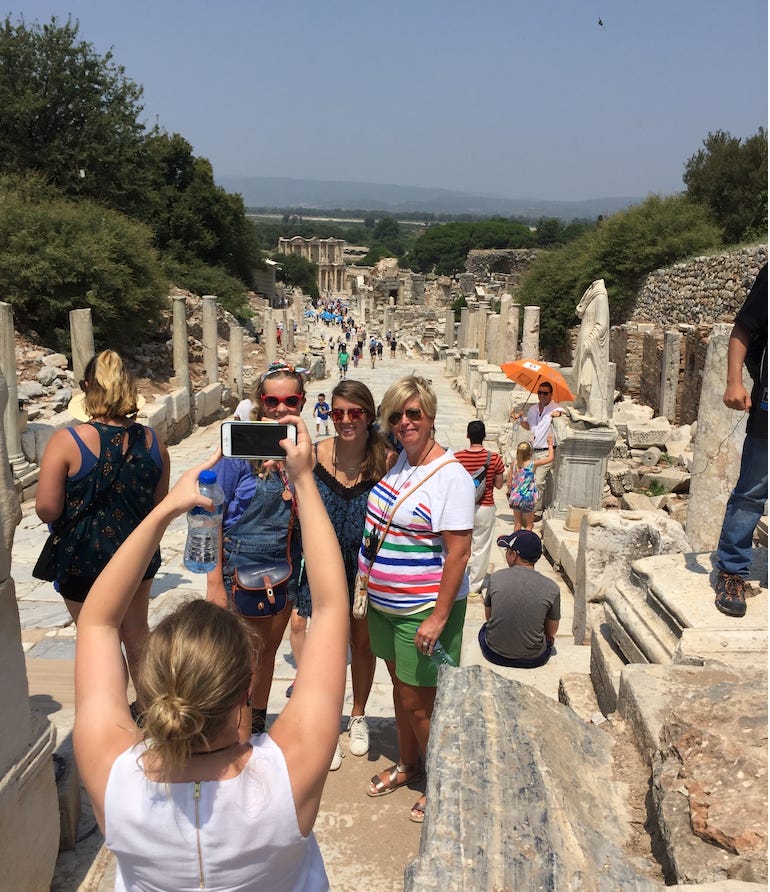
The very same cities where people once faced destruction also gave birth to community spaces, market stalls, amphitheaters, plays, poetry, comedy, and invention. These are the things that make us human. That creative spirit survives today in the small craftspeople we met—especially the local rug makers continuing generations-old traditions. Whether weaving by hand, using looms, or modern factory techniques, these artisans work with incredible care and skill. They’re the kind of people I always enjoy meeting most: hardworking, family-focused, and committed to giving their children a better future through education and opportunity.
At its heart, Turkey reminded me once again that while history remembers the empires and their battles, it’s the everyday people—the builders—who carry the future forward.
Egypt and Jordan: Where Ancient History Meets Present-Day Struggles—and Hope
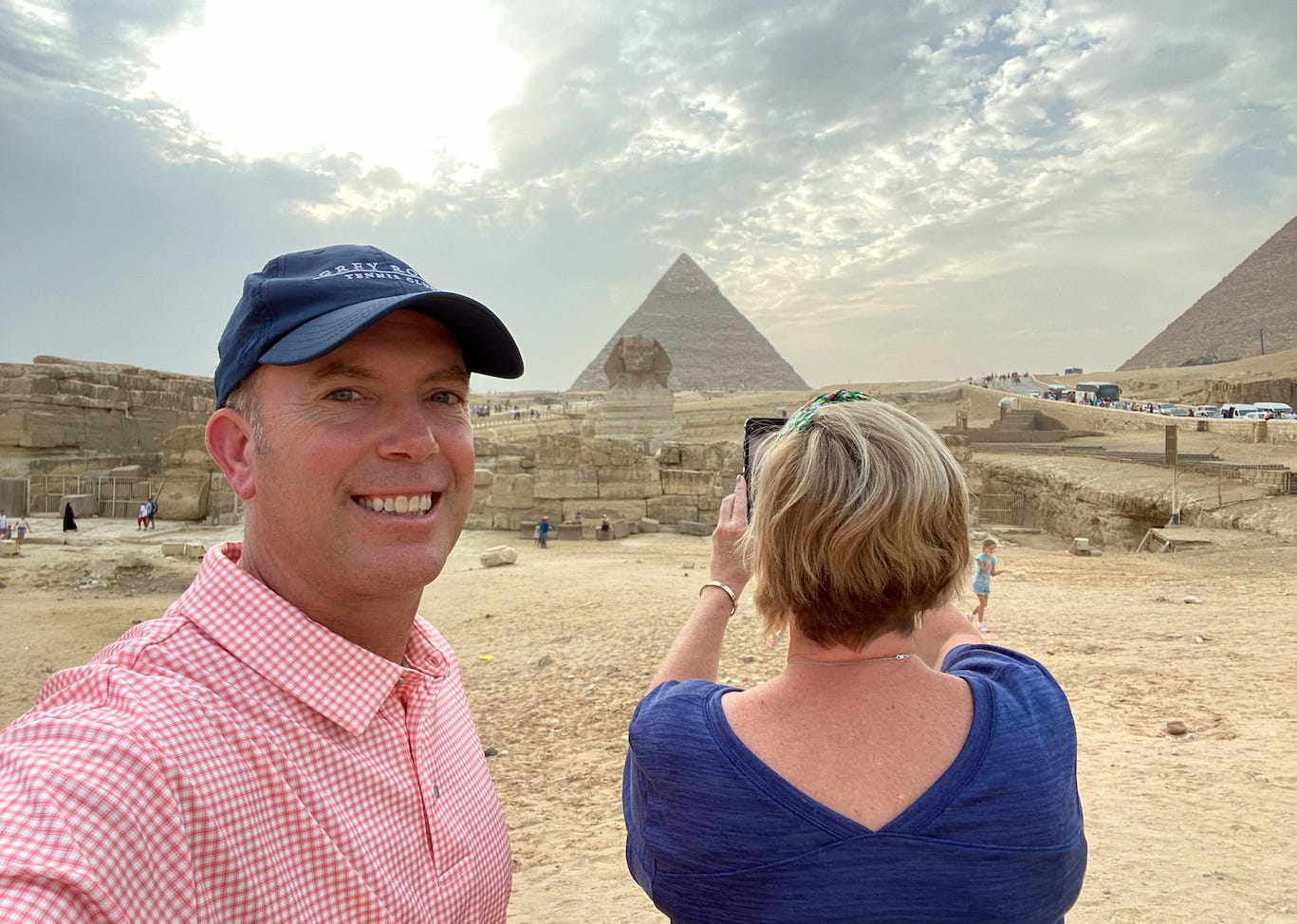
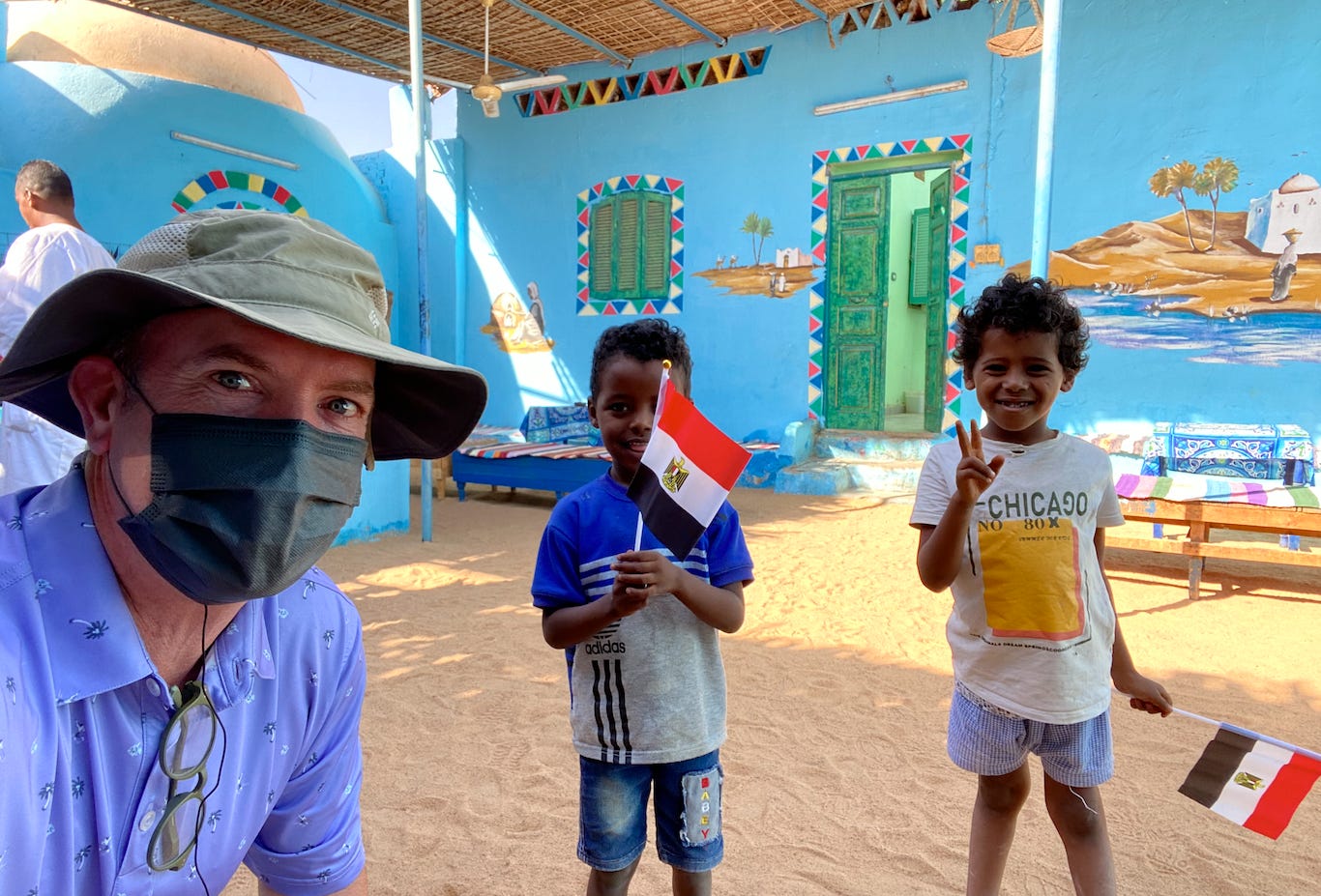
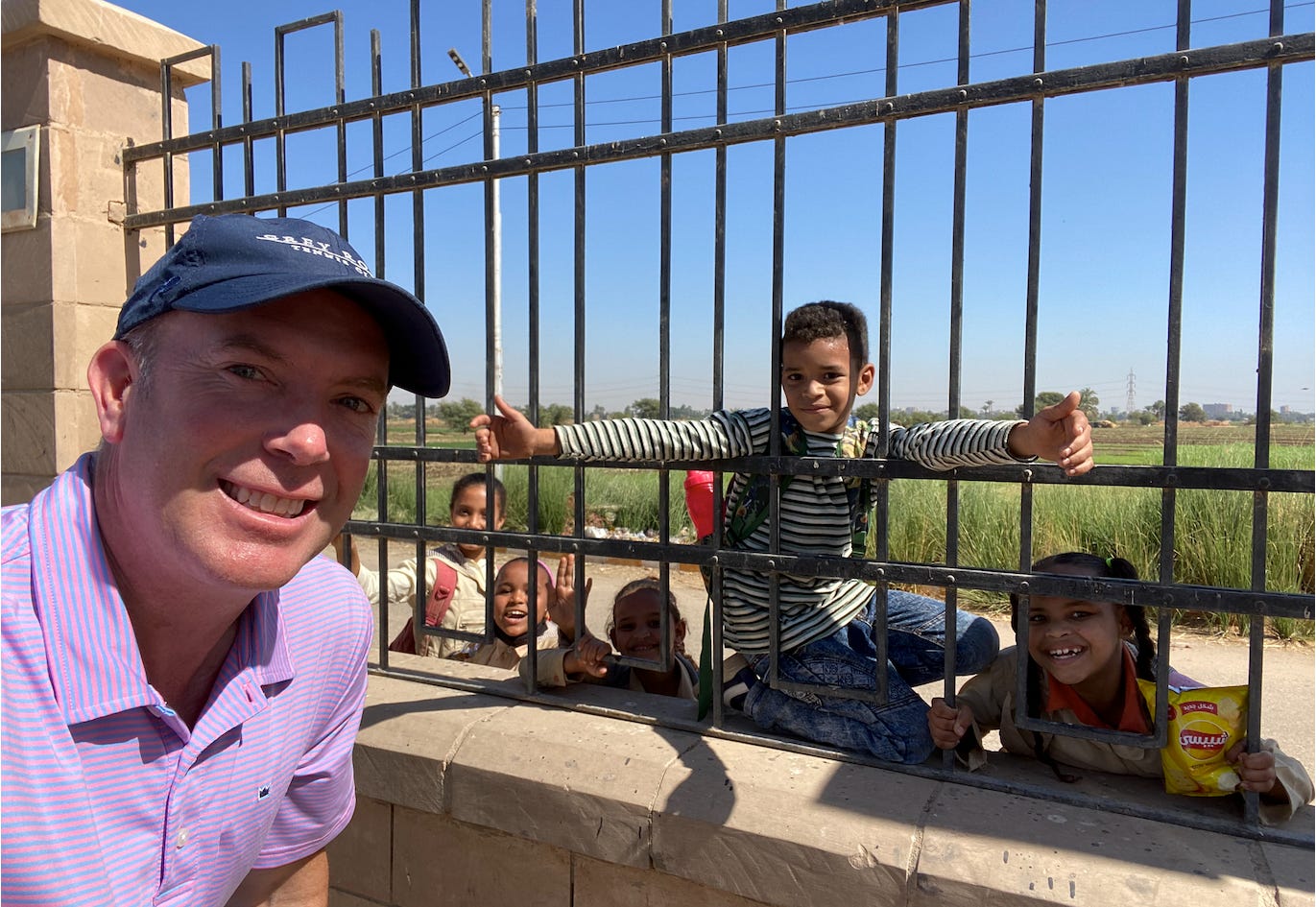
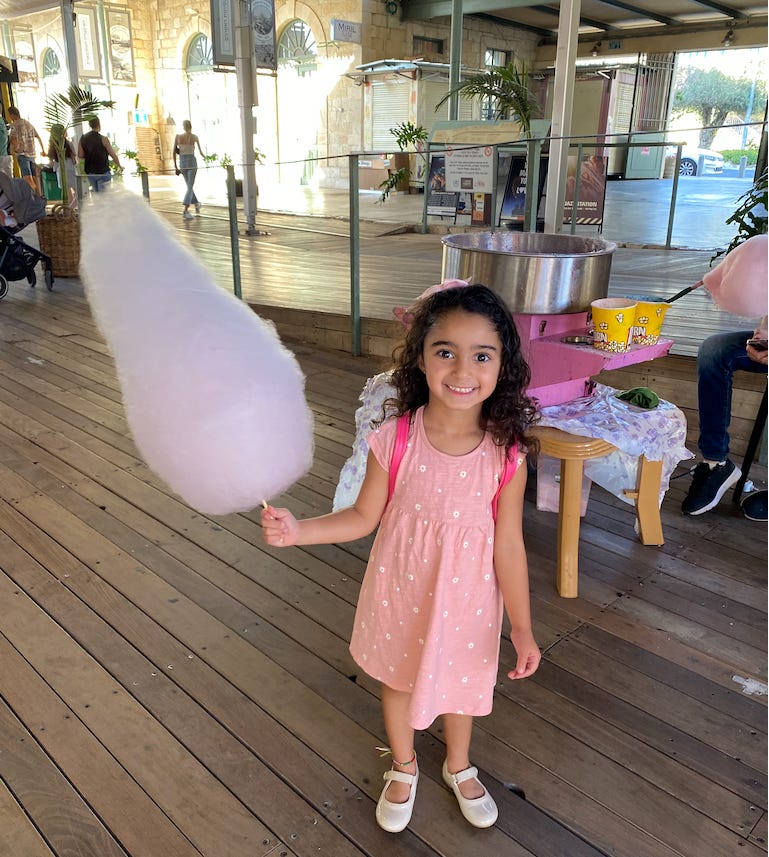
Nowhere on earth do the contrasts of past and present come into sharper focus than in Egypt and Jordan. In just two weeks of travel, we stood before the Pyramids of Giza—symbols of civilization’s earliest engineering feats—and wandered through newly uncovered Roman ruins in Amman that date back over two thousand years. Yet even amidst this breathtaking history, what always stays with me most are the children. One of my favorite things to do when I travel is to take photos of kids around the world. Their laughter, their curiosity, their smiles—whether in Cairo or Amman—remind us that no matter where we’re from, we all want the same things: opportunity, security, and a better future for the next generation.
But these moments of beauty exist alongside sobering realities.
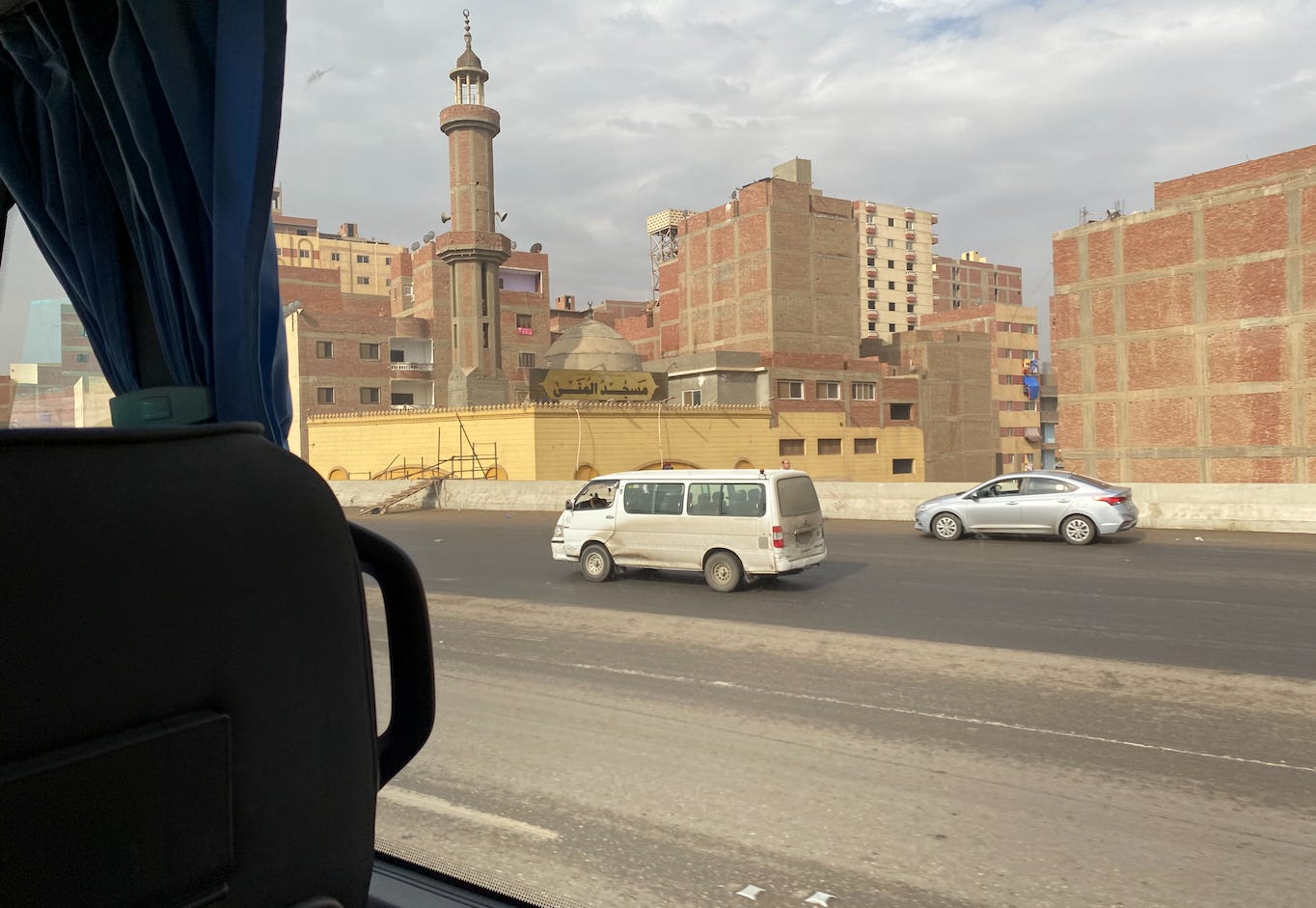
In Cairo, the Egyptian government’s inability to provide even basic infrastructure was on full display. I’ll never forget seeing a makeshift scaffolding and ladder system built so that commuters could climb onto an elevated highway and catch rides from passing vans—a DIY public transit system born from desperation, not design. The chaos, the dust, the lack of safety standards felt more like a scene from the American Wild West than a modern capital city.
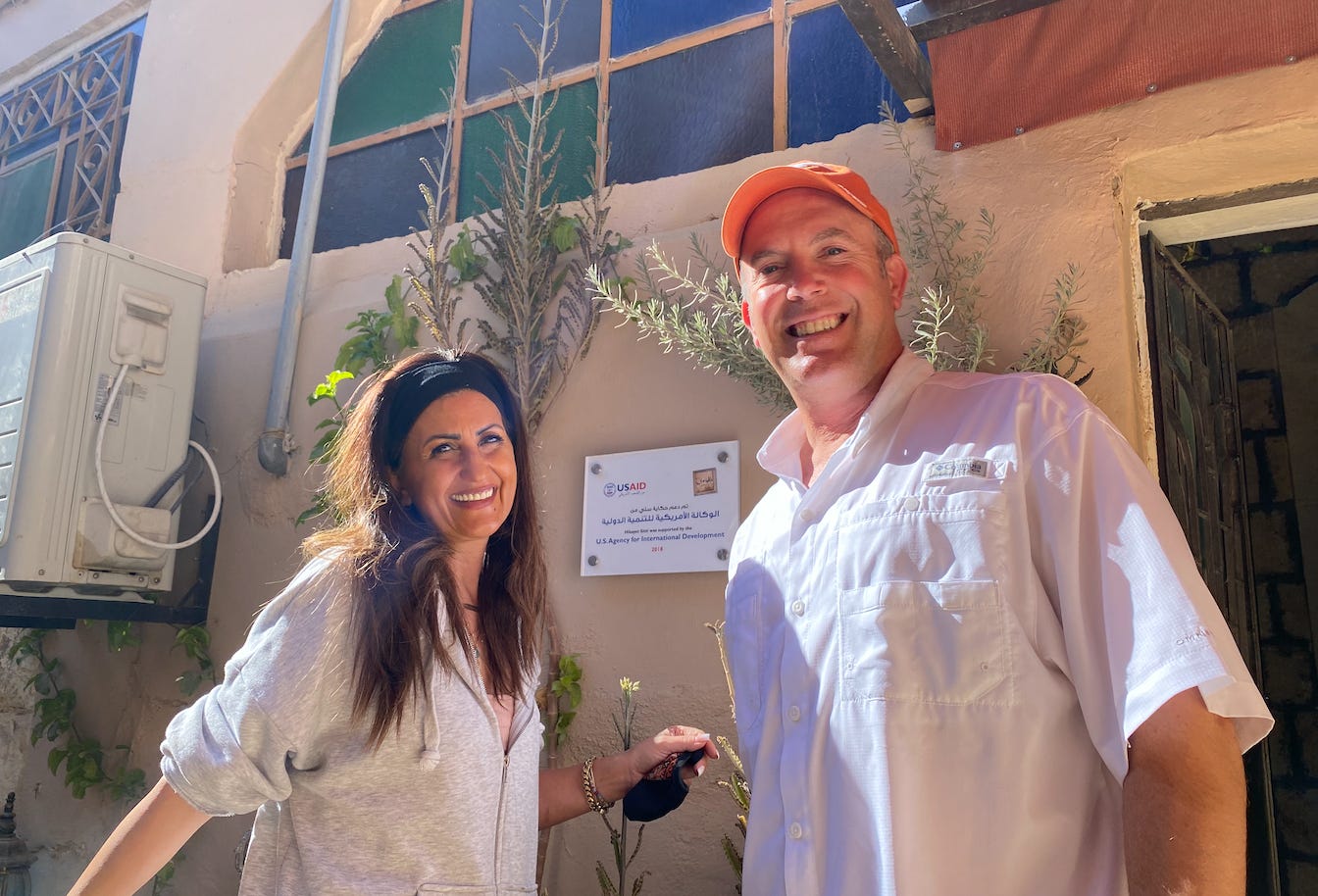
And yet, across the border in Jordan, we saw what’s possible when local entrepreneurship meets international support. In a small town outside Amman, we met a woman—one of the first business owners in her family—who proudly runs a restaurant she built with the help of a USAID grant. The plaque still hangs on the wall outside, a quiet symbol of partnership and progress. It was a reminder that diplomacy isn't always conducted in marble halls—it can happen in corner cafés and small businesses where people create jobs and change lives.
At the end of the day, whether it’s in ancient cities or modern villages, the path forward is always the same: jobs, education, and a shared focus on our children’s future. Extremists seek to divide and destroy. Builders give people something to believe in—and something to pass on.
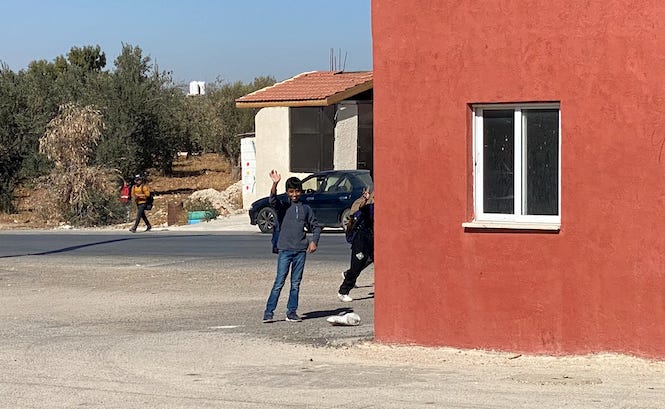
But it was a trip in 2022 to Israel that brought everything into focus.
The People vs. the Politics
We spent 11 days across Israel—meeting military leaders, politicians, Palestinian officials, entrepreneurs, and everyday citizens. From Tel Aviv to the Golan Heights, I saw both the tension and the resilience. I walked the tunnels dug by Hezbollah, saw Gaza from afar, and stood in ancient cities like Jerusalem where history breathes through every stone.
What I came away with was this: Israelis are incredibly resilient. Despite internal disagreements, language barriers, and generational trauma, they persist.
I was deeply saddened to learn that the kibbutz I visited called Kfar Aza was one of the sites of savage destruction and massacre at the hands of Hamas on October 7th. I don’t know the fate of the soldier I met 13 months earlier but its a personal reminder of the evil that exists in the world.
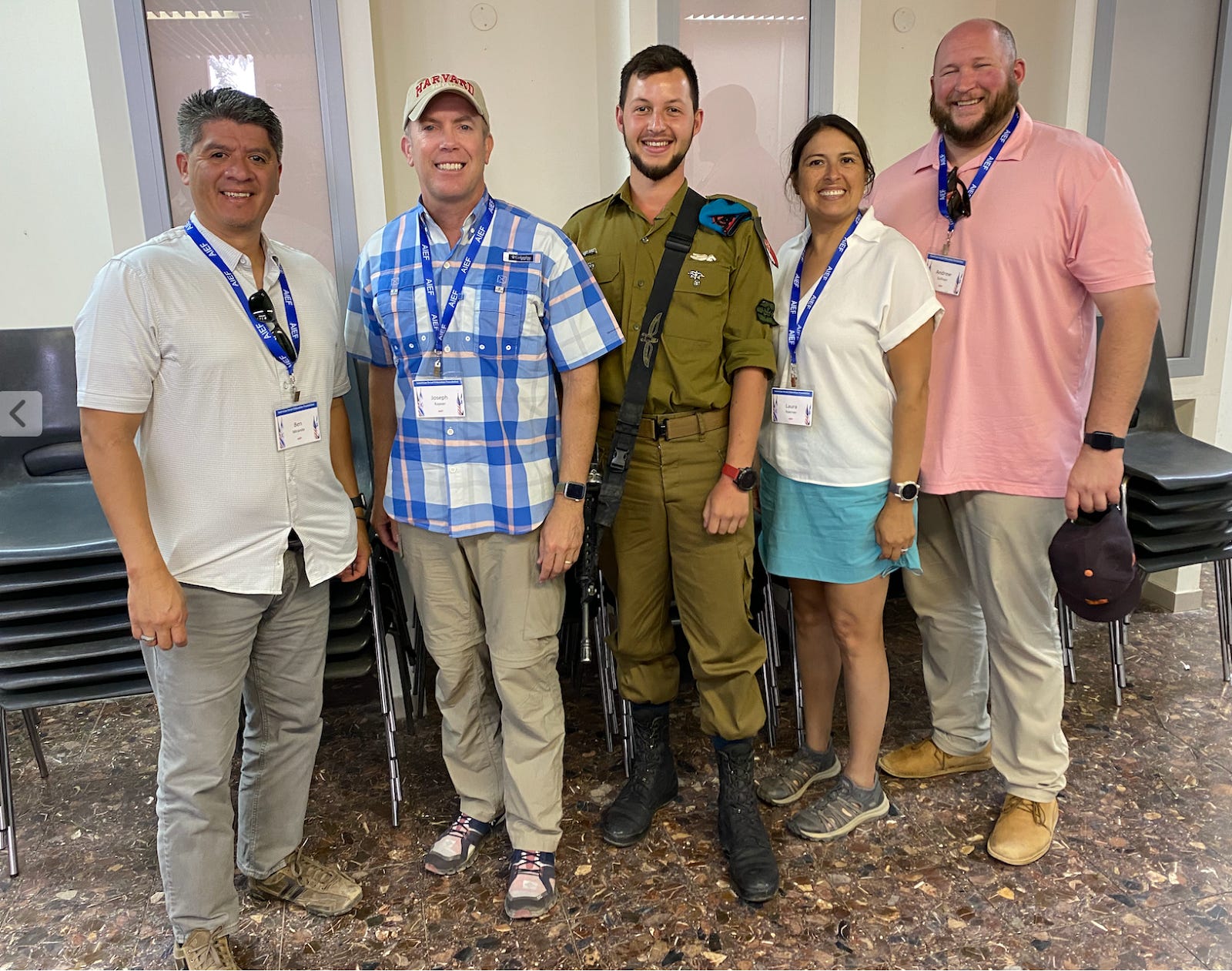
That’s why I’m frustrated when I see voices on the far left, particularly in the U.S., failing to distinguish between the policies of an elected Israeli government and the existence of Israel itself. Too many ignore 2,000+ years of persecution or are unwilling to see the difference between legitimate critique and veiled antisemitism.
We need more travel, more listening, and more empathy—not more knee-jerk reactions to headlines.
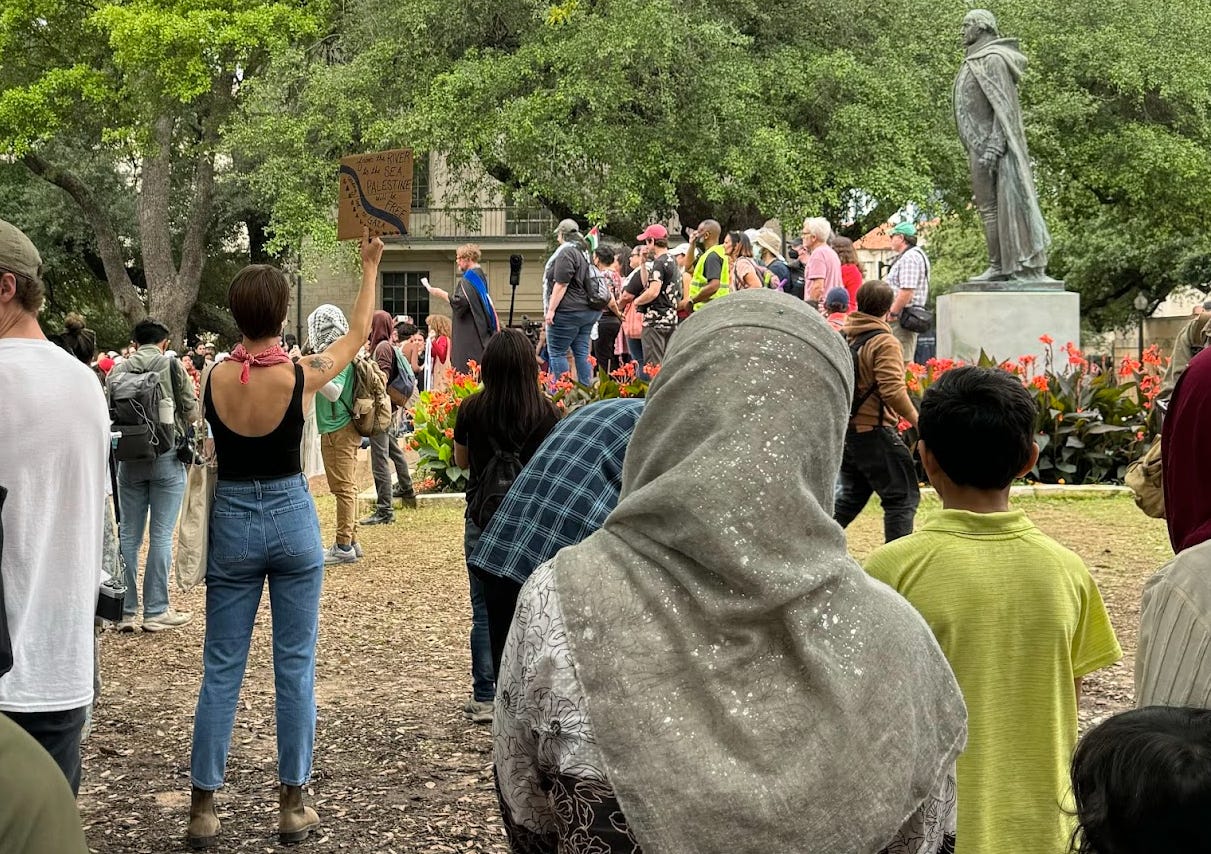
In fact, in May 2024 I attended the outskirts for a pro-Palestinian protest and was saddened to see a woman proudly holding a sign that said, “From the River to the Sea Palestine Will be Free.” The phrase “From the river to the sea, Palestine will be free” refers to the land between the Jordan River and the Mediterranean Sea—encompassing all of Israel, the West Bank, and Gaza. While some use it to express support for Palestinian rights, the phrase is widely recognized as a call for the elimination of the state of Israel. It has been adopted by groups like Hamas that openly reject Israel’s right to exist. Whether the person holding this sign understood its full implications or not, the message is deeply offensive to many and reinforces the divide rather than seeking peace. Like many who have not studied history or choose to ignore it, she was unknowingly supporting the mantra of extremists like Hamas.
What Do Most People Really Want?
Across my decades in the Middle East, the answer is simple: Most people just want to be left alone to live their lives. They want a decent income, safety for their families, and a path forward.
That’s why I’m so inspired by people like Daniel Lubetzky, founder of KIND Bars and PeaceWorks. He’s built businesses that unite Jews and Palestinians through commerce, and now he’s launched the Builder’s Movement—a call for action by moderates who are tired of letting extremists dominate the conversation.
At a speech in Austin, Lubetzky said it best:
“Extremists wake up every morning ready to destroy the status quo.
Moderates? We just want to know what’s for breakfast.”
The Takeaway
Extremists don’t want solutions. They want chaos.
Moderates build. Extremists tear down.
I’ve seen that lesson play out across Iraq, Turkey, Israel, Dubai, Qatar, Kuwait, Egypt, Jordan, and beyond. And it holds true here at home, too.
If we want to build a better future—for the Middle East, for America, for our children—we have to stop letting the loudest voices drown out the wisest ones.
It’s time for the builders to lead—and for moderates to speak up before it’s too late.
Let me know what you think.
And if you’ve had a personal experience in the Middle East—or anywhere else that shaped your perspective—I’d love to hear your story.
Until next time,
Joseph
Joseph, thank you for yet another thoughtful, thorough, and loving tribute to the essential decency of our fellow passengers on this tiny blue spaceship. May we all live long and prosper.