


A few weeks ago, voters delivered a split-screen view of where American politics may be headed. In New Jersey and Virginia, they chose two leaders cut from the same cloth: pragmatic, disciplined, and deeply rooted in public service. In New York City, voters went in a very different direction, embracing the most liberal mayor the city has elected in modern memory. A proud socialist.
Three Democrats — Mikie Sherrill, Abigail Spanberger, and Zohran Mamdani — all made history. But how they won, and who they now represent, could not be more different.
And that contrast is the whole story.
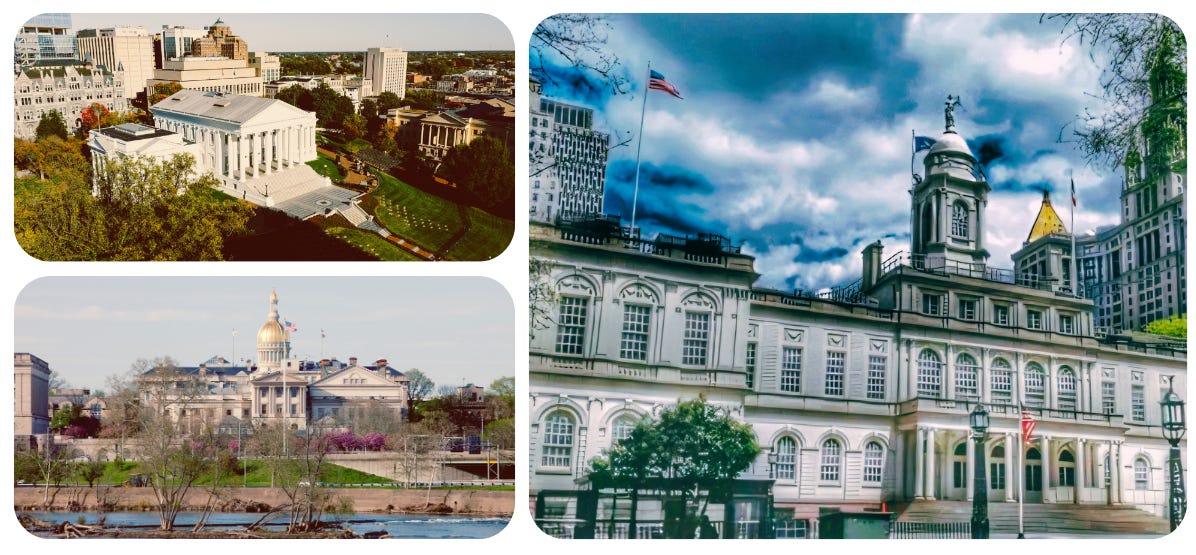
The Pragmatists: Sherrill and Spanberger
Two former national-security professionals, one a Navy helicopter pilot, the other a CIA officer, will now lead New Jersey and Virginia. Their résumés matter less than how they won: by going straight to the middle.
Mikie Sherrill — New Jersey’s Governor-Elect
Sherrill won with nearly 57% of the vote, flipping suburban and traditionally Republican counties by talking about the basics: education, economic stability, and support for veterans and families. She’s the first Democratic woman ever elected governor in New Jersey — a milestone grounded not in ideology, but in competence and steadiness.
Abigail Spanberger — Virginia’s Governor-Elect
Spanberger also won with 57% — the exact same signal from voters in another competitive state. She campaigned on affordability, security, and pragmatic governance. She didn’t attack the middle; she competed for it. And Virginia rewarded her with its first-ever female governor.
Together, Sherrill and Spanberger proved something important: moderation isn’t a retreat. It’s a winning strategy. It’s also where most Americans still live, no matter what our social media feeds tell us.
And for me personally, it was amazing to watch them both give their victory speeches because I got to know them when we travelled together raising money as Veterans running for office in 2018. They are both a force of nature.
The Socialist: Zohran Mamdani
New York City went in a different direction.
Zohran Mamdani — New York City’s Mayor-Elect
Mamdani, a democratic socialist from Queens, won with just over 50% of the vote, powered by activists, small-dollar donors, and an agenda designed to challenge business-as-usual at every level.
His platform is bold by any measure:
Housing redistribution
Strict tenant protections
Sweeping challenges to corporate influence
Even foreign policy pronouncements, unusual territory for a mayor
His supporters see him as the future of urban politics. His critics warn that pushing too far, too fast could drive families and businesses out of the city. Both sides agree on one thing: he represents a sharp break from the pragmatic center.
Two Paths — and One Caution
What we’re seeing is a test of two political instincts inside the Democratic Party:
1. The instinct to govern from the middle, grounded in problem-solving, discipline, and winning the trust of independents and moderates.
2. The instinct to govern from the edges, driven by activism, ideological certainty, and the belief that bold disruption is the only moral path forward.
The question isn’t which camp is louder.
It’s which one can actually build coalitions big enough to govern.
Sherrill and Spanberger showed that winning competitive states requires speaking directly to people’s lives, affordability, education, family stability, safety, and the belief that tomorrow can be better than today.
Mamdani showed that in deep-blue cities, a mobilized base can elect a mayor on an unapologetically socialist platform, but that comes with its own risks. Cities don’t run on ideology; they run on cooperation, investment, and trust. The test will be whether bold rhetoric can translate into durable results. I am truly hopeful they do, but only time will tell. I want what is best for New York. After all, my youngest daughter is moving there in the Spring.
Why This Matters for the Country
If Democrats double down on pragmatism — as New Jersey and Virginia voters seem to prefer — it forces Republicans to meet them there. Competitive politics works like gravity: both sides get pulled toward where the voters actually are.
But if Democrats move toward the edges, they energize the base while pushing moderates — the people who actually swing elections — further away.
This isn’t about left, right, or center.
It’s about what kind of leadership can hold a fractured country together long enough to make real progress.
The Simple Lesson of 2025
You can defeat division by meeting people where they are.
You lose the center when you stop competing for it.
My friends, Sherrill and Spanberger, proved that steady, pragmatic leadership still wins — and wins big. Mamdani proved that ideology can thrill a city but may strain its ability to hold onto the people and businesses who make it run.
The future of the Democratic Party, and maybe the country, hinges on which lesson leaders choose to follow.
Most Americans don’t want political theater.
They want problems solved.
They want leaders who show up.
And they want a politics that feels like it’s working for them again.
That’s where USTomorrow will ultimately be decided: not on the extremes, but in the middle — the only place where a divided country can ever come back together.
Closer to home, I was proud to attend and support Mayor Jim Penniman-Morin’s re-election kickoff. Cedar Park deserves steady, thoughtful leadership that puts people first. You can learn more about him and the rise of Cedar Park here.
On a lighter note, I’m sharing this fabulous playlist created by Texas2036. It’s my current favorite (check out “Just Outside of Austin”) — a soundtrack to spark reflection and keep ideas moving.
Take care,
Joseph
Joseph Kopser
Co-Founder of Joseph Kopser
Well said, Joe, and spot on. Tacking towards moderation and not being beholden to the fringe elements of the party, which Biden fell prey to, is the only way to compete against the extremism from the other side. Mamdani..we'll see how he governs NYC, a unique leadership lab and not reflective of the rest of the country, and in following the current incumbent he should not have too much trouble looking good! I sense more pragmatism in him, but time will tell.
I am genuinely interested in why you think Zohran Mamdani is not a pragmatist. How are you defining that term?