


The free press has been on my mind this week. Three things put it there.
Weak sauce at the Pentagon
One of our readers, Dan B., sent me a story I’d missed (thank you, Dan). Max Lederer joined Stars and Stripes in 1992 and had been its publisher since 2007. In August the Pentagon fired him.
The reason given was “insubordination.” According to the lawsuit he has since filed, he’d refused an order to fire his editor in chief and a reporter after they talked to CBS News about the paper’s independence. That came a few months after the Pentagon decided everything the paper publishes has to be consistent with “good order and discipline.”
I get the counterargument. Stars and Stripes is not the New York Times. About half its budget is taxpayer money, the staff are government employees, and the audience is in uniform. “Good order and discipline” isn’t a slogan. It is how a force stays a force. A paper that reads to commanders like an opposition research shop will eventually get treated like one. That still doesn’t get you to firing the publisher for refusing to fire an editor and a reporter over a CBS interview about independence. The mission of the paper, for decades, has been to tell service members what is actually happening, including when it is uncomfortable. Lederer isn’t a blogger. He is a former JAG who deployed for Desert Storm and came home with a Bronze Star. If the standard is now “consistent with good order and discipline” as defined by the people being covered, you no longer have a newspaper. You have a public-affairs product with a familiar masthead. It’s weak sauce.
I spent 20 years as a Soldier. The oath we took was to support and defend the Constitution of the United States, and the very first amendment to that Constitution protects free speech and a free press. You can’t defend the whole document and skip the first part.
Late last month Editor & Publisher named him its News Executive of the Year. Good for them.
There is also a workforce point here that gets lost in the press fight. We already struggle to recruit and keep the people we need. Young Soldiers, sailors, airmen, and Marines compare notes. If the paper written for them starts reading like it cannot print a hard story, they don’t become “more disciplined.” They become more cynical, and they get their news somewhere else. A free press inside the force is not a luxury. It is part of how you keep a professional military instead of a brittle one. That is the same problem we talk about everywhere else: trust the institution, or watch people walk.
Even Fox News turned off the cameras
It’s been quite a month for the press. In September the President announced he was banning CNN, MS NOW and Politico from the White House because he didn’t like the coverage they were giving him. Then the administration pulled CNN from its turn in the TV pool (the shared crew that films the President for everybody).
So the other networks shut the pool down. ABC, CBS, NBC. And Fox News.
I was heartened to see Fox standing there with the rest of them. Their joint statement was two sentences long: “The public has a vital interest in receiving accurate, independent information about its government. No administration should restrict a news organization because it objects to its reporting.”
That is the rare case where rivals with very different audiences agreed on a rule instead of a team. The rule is the part worth keeping: access is not a reward for favorable coverage. If we only defend that rule when our side is holding the microphone, it will not survive the next administration either.
For a stretch, the President of the United States went without the network pool cameras. It’s rather ironic. It’s no secret that he lashes out at the press. But without the press, without that microphone, much of his message would never get amplified to the general public at all.
A federal judge has put the ban on hold for now, and a longer ruling is due next week. We’ll see.
Dinner with David French
And then there was the Texas Tribune Festival dinner here in Austin, where David French of The New York Times was on stage with Matthew Watkins, the Tribune’s editor in chief.
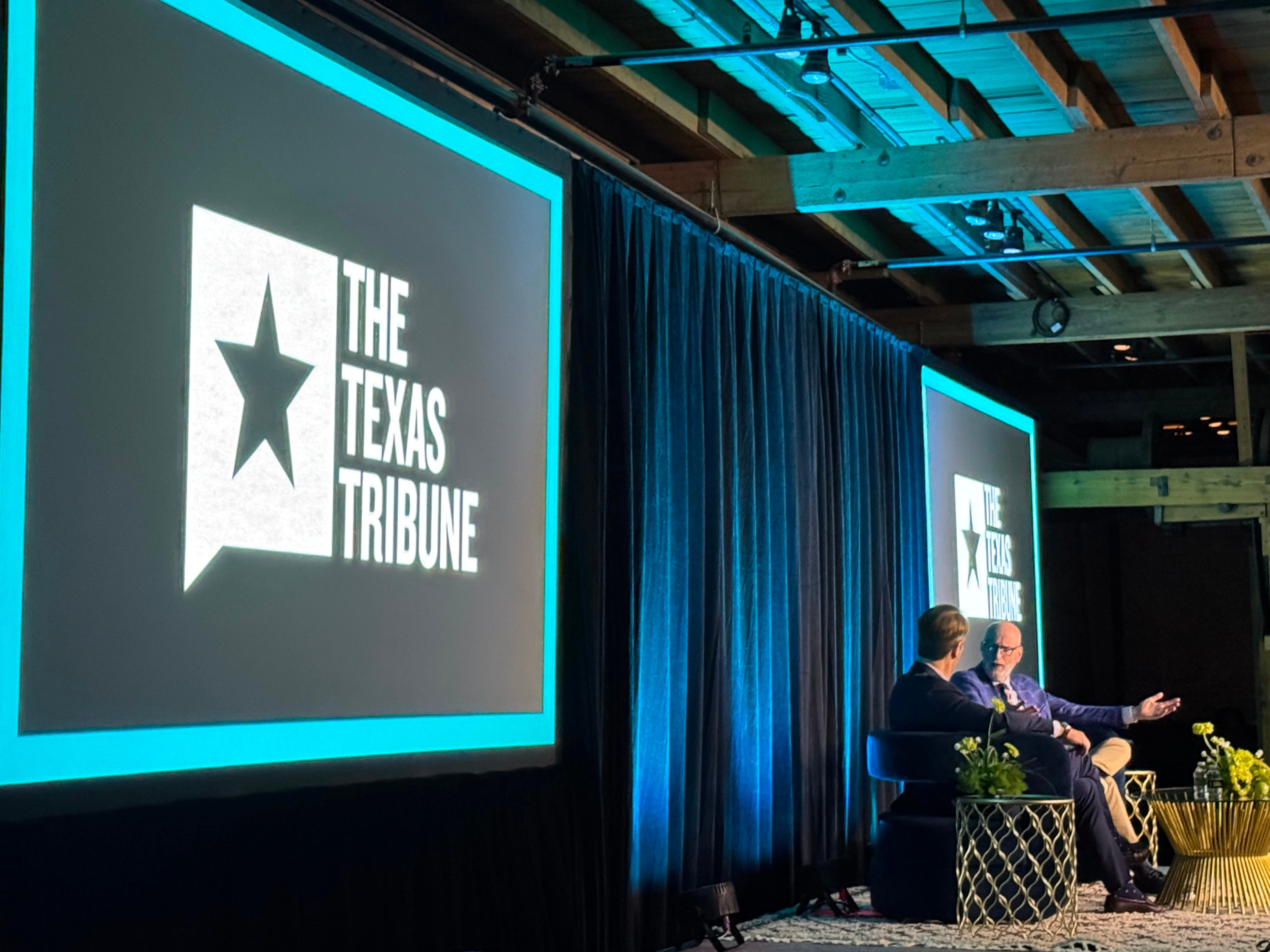
I didn’t realize how much the two of us have in common. He grew up in Georgetown, Kentucky, just up the road from where I grew up in Lexington. He’s a former Republican (so am I). He served in the Army and deployed to Iraq with the 3rd Armored Cavalry Regiment, the same regiment I served in as a young officer. My own 14 months in Iraq were up north around Mosul in the same area he served in as well. I never realized all the overlap.
So his story hit me harder than I expected.
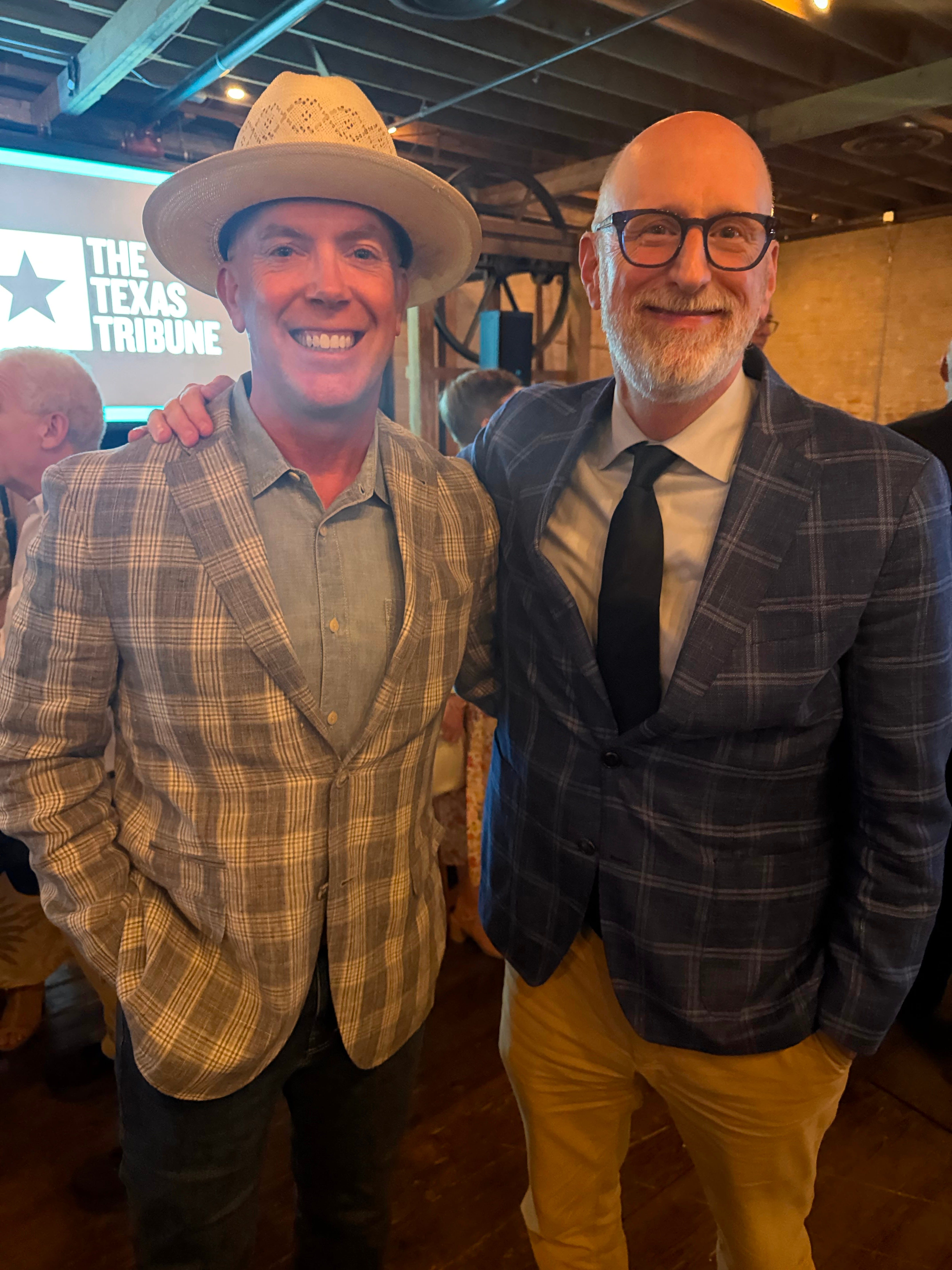
He said the party of his childhood has moved so far that it feels, to him, like a cult of personality. Then he went deeper. His evangelical roots have been shaken too, because the church pushed him away for speaking out against the President.
I do not think everyone who stayed is in a cult, and I do not think everyone who left is a hero. A lot of people I served with still vote Republican because of taxes, borders, schools, or a simple distrust of the other party. They are not auditioning for a personality. What French described is what happens when a party and a church make disagreement on one man the price of belonging. That is a real loss. It is also not the same thing as saying the whole coalition is gone.
That was moving to hear him describe that shift he experienced. It reminded me of The Kingdom, the Power, and the Glory by Tim Alberta, a book I wrote about here last year. Alberta (a pastor’s son himself) shows how the evangelical movement had been drifting away from its Christ-centered message for years. In its near-unison support of Donald Trump’s antics, too much of it has jumped the tracks. (You can reread the piece below)

Somebody has to shine the light
I’ll fully admit that an increasingly large number of media outlets are biased and have an agenda. I see it too. The answer is not fewer reporters with access. It is more outlets that will print the inconvenient fact and let you decide.
If you are not already supporting local reporting, start there. In Austin that includes KUT, KLRU and The Texas Tribune. Where you live, it is whoever still shows up to the school board, the courthouse, and the military post entrance. A free press is not a partisan actor. It is a constitutional counterweight.
I wrote that after a dinner with Bob Woodward last fall. I believe it more today, including when the coverage annoys me.

Who is doing that work where you live, and where do you think they are getting it wrong? Hit reply. I read every one.
Take care,
Joseph
Joseph Kopser
Co-Founder, USTomorrow.us
Joseph Kopser is a lifelong problem solver committed to building the teams needed to take on our toughest challenges. He is currently President of Grayline after he co-founded and served as CEO of RideScout, before it was acquired by Mercedes. He served in the U.S. Army for 20 years earning the Combat Action Badge, Army Ranger Tab and Bronze Star. He is a graduate of West Point with a BS in Aerospace Engineering and also received a Masters from the Harvard Kennedy School and former member of the Army Science Board. He was recognized as a White House Champion of Change for his efforts in Energy and Transportation as well as won the U.S. DOT Data Innovation Award. He co-authored the book, Catalyst, a book focused on helping teams adapt to change. He is the Chair of the Board of Advisors for the CleanTX, an economic development and professional association for energy innovation. In 2025, Joseph was selected for the Texas Business Hall of Fame Future Texas Business Legend Award. Joseph and his wife of 31 years, Amy, live in Austin and they are extremely proud of their three adult daughters living their best lives.