


Sorry about last week’s gap, Amy and I are in the process of starting the next chapter in our lives. We’re selling our family home in Circle C for a condo downtown Austin. I’ll keep you posted on how it goes.
Back to USTomorrow….. We all spent four months watching a war with Iran, and this week we are watching “the peace.” If you want to better understand either one, do not watch the missiles. Watch the oil.
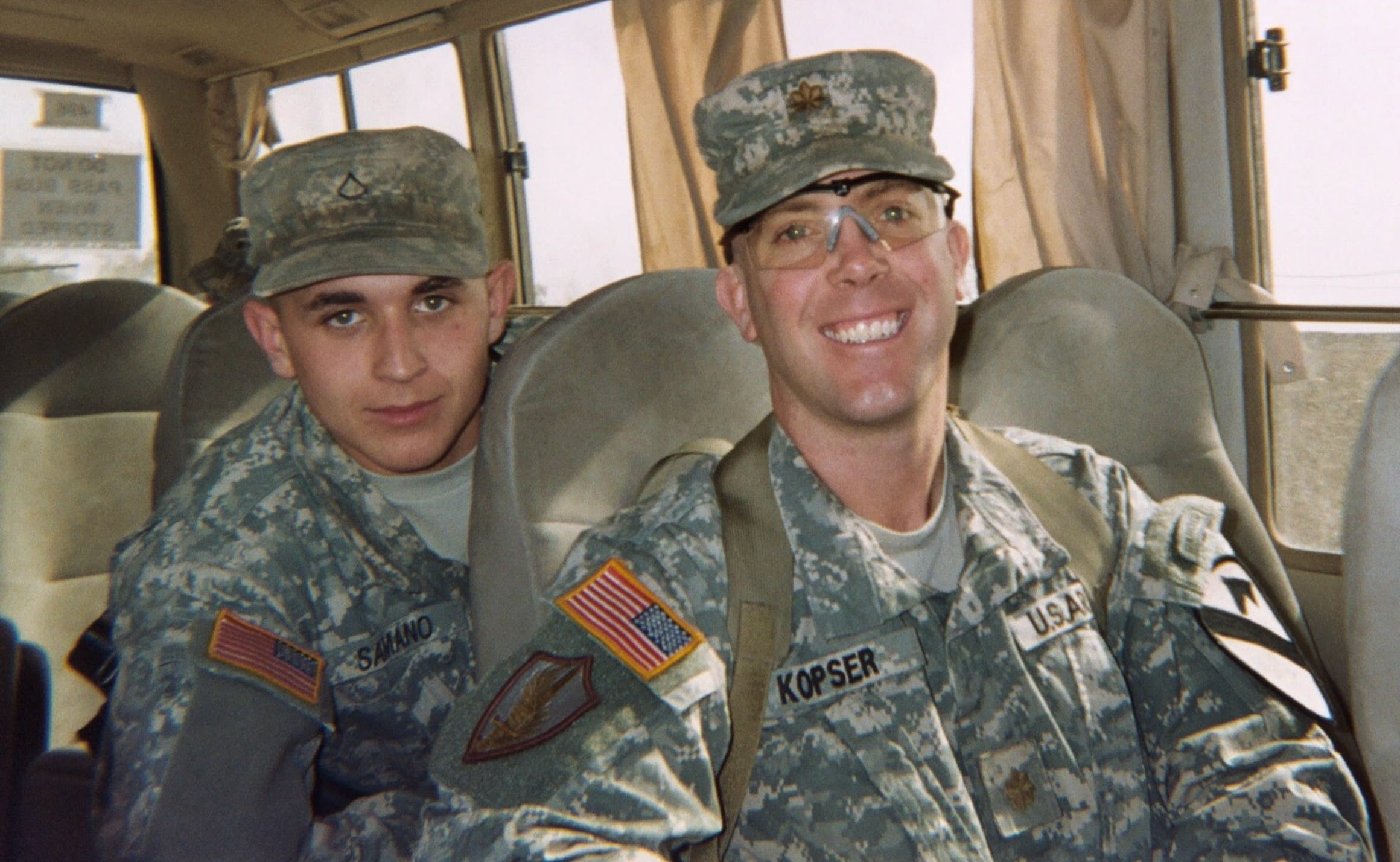
Twenty years ago this October, I deployed to Iraq for the second time.

By then I had learned which jobs in a war zone were the ones that got people killed, and one of the most dangerous was also one of the most ordinary. It was moving fuel. The convoys that hauled diesel and gasoline across that country were targets, and Soldiers died protecting them. I came home convinced that how we move and how we power ourselves is not a side issue to national security. It is national security. That conviction is why I started a mobility company, why I helped launch the Defense Energy Summit, and why I have spent twenty years working on energy whether the headlines cared or not.
This month the headlines do care.
Here is where things stand as I write this. After four months of open war that began at the end of February and reached all the way to the death of Iran’s Supreme Leader, the United States and Iran signed a memorandum of understanding on June 17 to stop the shooting. It calls for a sixty-day ceasefire and, notably, for reopening the Strait of Hormuz. Negotiators are now meeting in Switzerland, and on June 22 they announced a roadmap toward a final agreement within sixty days. That is the good news, if it’s real.
It is also fragile. Within seventy-two hours of the memorandum, follow-on talks were cancelled, Iran’s Revolutionary Guard announced it was closing Hormuz again, the U.S. military said the strait was open and that Iran does not control it, and the President of the United States went on social media to threaten to hit Iran “very hard again, only harder,” all while his own Vice President sat at the negotiating table. The single most important question, whether Iran gives up the right to enrich uranium, sits exactly where it started. Iran’s president says he will never back down from it. So handle the word “peace” with care. What we have is a pause.
Follow the Money
Now watch the oil, because the oil tells you what the war was actually about.
When the fighting was at its worst, Brent crude spiked above $120 a barrel. By last week it had fallen back to around $80, roughly a third off its peak . What moved the price was not the body count. It was whether tankers, and the companies that insure them, believed they could get through the Strait of Hormuz. Prices fell when ships started moving and rose when the talks fell apart. The market was not pricing the war. It was pricing the chokepoint.
Then came two revelations that sharpen the point.
First, the Wall Street Journal reported on June 16 that the deal waives American sanctions on Iranian oil, along with the banking, shipping, and insurance that make those sales possible. In plain terms, the first thing the winning side put on the table was letting Iran sell its oil again. (You may have seen this described as Iran being allowed to sell oil “in dollars.” That is not quite right. The accurate version is that the sanctions come off so the oil can flow, and Iran does not get its frozen funds back up front.)
Second, and this is the one I cannot stop thinking about, Iran has announced that once the sixty free days are up, it intends to charge ships for passing through Hormuz. Tehran is careful to call these “fees” for services like navigation and insurance, not “tolls,” and it has stood up a new authority to collect them. A strategist at the Naval War College said the quiet part out loud: the only service Iran is actually providing is not attacking your ship. We used to have a word for a payment you make so that nothing unfortunate happens to your cargo. We did not call it a service fee. The mafia refers to it as protection money.
Step back and look at the shape of it. We fought a war. We won it, by any military measure. And the moment the shooting stopped, the negotiation turned out to be about the free flow of oil to and from the Middle East, and about who controls the narrow water it passes through. Twenty years and two of my own tours later, it is still about the oil. It always was.
I have written before that fracking did something close to a miracle for this country.

In 2005 we were building terminals to import natural gas, certain we would run short. By 2017 we were a net exporter and soon the world’s largest LNG exporter. We bought ourselves a kind of energy independence almost no one predicted. But the rest of the world got no such gift. Europe, Japan, India, and especially China still depend on oil and gas that must move through places like Hormuz. As long as that remains true, keeping those lanes open stays an American interest — one we’ve paid for fifty years, not in cash, but in Navy carrier groups.
That is energy security as national security, and we are watching it negotiated in real time among the United States, Israel, and Iran.
This stuff is hard. It is not won on social media or with quick declarations.
Here is what worries me, and it is the reason I am writing today instead of just reading the news like everyone else.
I have argued in this newsletter that AI data centers are the new fracking. The shape of the story repeats. A new and voracious appetite, this time for computing power, collides with the physical world, and the binding constraint is energy. Data center electricity demand in this country is on track to nearly double in just a few years. Right here in Texas, the grid operator is now holding a queue of requests to connect that is larger than the entire current peak demand of the state, and close to ninety percent of it is data centers. Last week our utility commission approved a brand new process just to triage who gets to plug in. Read that again. We are building a system in which a handful of players compete for access to scarce power through a single chokepoint, and a central authority decides who passes.
We have seen this movie. We have the receipts, in blood and treasure, from forty years of it in the Middle East. The difference, and it is the only unqualified good news in this whole essay, is that this chokepoint is ours. The uranium is in Wyoming. The natural gas is under Texas. The reactors, the transmission lines, and the rules for who connects are decisions we get to make at home, on our own timeline, without a fleet. We spent two generations, and too many of my friends, learning how dependence works when the resource sits under someone else’s dirt. We are about to find out whether we learned anything, now that the resource sits under our own feet.
I will say one more thing, and I will try to say it the way I try to say everything here, as someone who has voted for both parties and cares more about getting this right than about who gets the credit. I have been a student of military history my whole life, of national security for forty years, and of energy security for more than twenty. Watching the past four months, what concerns me is not ideology. It is the apparent belief that a region with three thousand years of memory can be handled like a real estate deal. (If you want a detailed analysis of how bad the MOU and deal are among several interest groups, you might enjoy the AIPAC breakdown point-by-point of the deal. I’ve personally never seen AIPAC push back this hard on Trump.). While I won’t share private conversations, many Trump voters and national security professionals I know believe this deal is shaping up to be weaker than the Obama-era agreement.
You cannot threaten to restart a war while your own diplomats are still in the room and call it strategy. You cannot declare the Strait of Hormuz “permanently toll free” in a press release while the other side stands up an agency to charge for it. Complexity does not care how confident you sound. The free flow of oil, and now the free flow of electrons, will be governed by the people who do the patient work of understanding how the system actually behaves. I would like that to be us.
You always get what you pay for
A White House that prefers shortcuts and “get rich quick” thinking tends to underestimate how complex these systems actually are. The Reflecting Pool debacle is my favorite example, but I digress.
So here is my penny for your thoughts. Do not let the ceasefire headlines convince you the story is over, and do not let the word “energy” get lost in the shuffle as a buzz word. What happened this month is the oldest story in modern statecraft: power, in both senses of the word, moving through a place narrow enough to squeeze. We have a rare chance to write the next chapter at home, on our own terms, with the tuition already paid. Energy security is national security. It was true in the fuel convoys outside Mosul. It is true in the Strait of Hormuz tonight. And it will be true in the server farms rising on the Texas prairie, if we are wise enough to see it coming.
Let me know what you’re seeing out there.
BTW— If you’re able to make it, I’m speaking on the topic of AI and its impact on business and society at the Austin Technology Council on June 30th. Join us if you can.
More soon,
Joseph
Joseph Kopser
Co-Founder of USTomorrow.us
Joseph Kopser is a lifelong problem solver committed to building the teams needed to take on our toughest challenges. He is currently President of Grayline after he co-founded and served as CEO of RideScout, before it was acquired by Mercedes. He served in the U.S. Army for 20 years earning the Combat Action Badge, Army Ranger Tab and Bronze Star. He is a graduate of West Point with a BS in Aerospace Engineering and also received a Masters from the Harvard Kennedy School and former member of the Army Science Board. He was recognized as a White House Champion of Change for his efforts in Energy and Transportation as well as won the U.S. DOT Data Innovation Award. He co-authored the book, Catalyst, a book focused on helping teams adapt to change. He is the Chair of the Board of Advisors for the CleanTX, an economic development and professional association for energy innovation. In 2025, Joseph was selected for the Texas Business Hall of Fame Future Texas Business Legend Award. Joseph and his wife of 31 years, Amy, live in Austin and they are extremely proud of their three adult daughters living their best lives.
YES!