


This piece today is designed to give you food for thought as you watch the growing worry and (sometimes) hysteria around AI and data centrs.
On a prep call for an interview recently, someone asked me a simple question. What would I most like to talk about? Leadership lessons? Handling tech change? The future of work?
All three, I told her. They’re turning into the same conversation.
The day before, I’d been on the phone with an aspiring entrepreneur who was connected to me. (By the way, that’s one of my favorite things to do. So many people helped me in the early days of RideScout, and paying it forward is not only fun but keeps me on my toes in touch with what all the cool kids are building). She has a health and wellness idea and wants to build an app around it, so she was asking me the questions founders have been asking me for years. How do I raise the money? Where do I find a CTO?
I told her to go to ChatGPT or Replit and type in everything she’d just described to me. She had already written the “requirements” document. She just didn’t realize it. The app would be up in hours (maybe minutes), and she could be testing it tomorrow.
Invention is limitless. That’s how my friend Chris Treadaway puts it, and I credit him with coining the phrase for this new era of AI. If you’re not following Chris, you should be. He’s doing amazing work in technology and the ethics of AI, so much so that he was invited by the Pope’s team to be part of a conference on artificial intelligence in Rome.
Mrs. Grevious would have loved this part
My sixth-grade teacher at Maxwell Elementary in Lexington, Mrs. Audrey Grevious, was a civil rights icon. She was one of those young women who chained herself to a lunch counter to demand service. And her big lesson for a room full of skinny little 12-year-olds was simple—
"When you see a problem, go and fix it. Don’t wait for others. Don’t wait for government.”
I’ve carried that my whole life.
But for most of my life, “go fix it” came with a price tag. You needed capital, a technical co-founder, and a couple of years of nights and weekends. I still remember some of the worst hotels I ever stayed in while building RideScout, because we didn’t have the money for a decent one. (And the summer night on a friend’s couch in Houston with no air conditioning, when I finally gave up and drove home to Austin.)
The great news about AI and emerging technology is that that barrier is falling fast. I’ve been saying for over 25 years that “people will be what they can see” and now they can build what they can see, too.
But who wants a left-handed football bat?
If anyone can build anything, building stops being the hard part. I could design a left-handed football bat this afternoon. It makes no sense, nobody wants one, and the machine will happily help me build it anyway.
So the question moves from “can I build it?” to “does anyone want it or need it?” That was always the real question in a startup (ask anybody who has pitched me with their ideas). AI just takes away the excuse for not asking it first.
And that’s the wonderful part. People can leave jobs they’ve outgrown. They can start side hustles. They can try a second act for the cost of a weekend instead of a second mortgage.
Now, a word of caution. I fully recognize that a lot of people have been taught to be afraid of AI. The swirl of the media, and the people who seek to divide us, are making it worse. And on top of that is the outrage over the dangers of data centers. Some of those dangers are real. Some are imaginary.
I wrote about this back in the spring, when I called data centers the new fracking. If you go back and reread it, I think it frames the current political debate pretty well.

And the debate has gotten strange. On one side of your split screen, the Replublican Governor of Texas is calling for a moratorium on new data centers. On the other side, the President of the United States is trying to rebrand artificial intelligence as “Super Intelligence” so we can push faster on the build-out of data centers and everything that comes with them.
Somewhere in the middle is probably the right answer.
If invention is limitless, so is knowledge
Now follow that one more step. If invention is limitless, so is knowledge, and so is information. I can find any document, read any book, get the gist of any podcast ever made. I can listen to Shakespeare in 30 seconds (not that I’d recommend it).
So what’s the role of the person?
Picture a hiring manager with five engineers in the final round, every one of them using the same AI tools. Why wouldn’t she hire the one who is the most interesting, the most personable, the most delightful to be around?
Gone are the days when you had to hire the jerk because that jerk was so talented and came with a resume that made everyone say, oh my gosh. And on the flip side, gone is the cover for the candidate who is just dull. Not a jerk. Just offers nothing to the team. Not curious, not interested, going through the motions.
I wrote this summer that the age of AI won’t be good for the dull jerks of the world.

I believe it more now than I did in July.
The soft skills are about to become the required skills
What we learned in kindergarten is coming back in style. Be nice to people. Share. Take your nap. We spent decades calling those soft skills, like they were electives. I hope we rebrand them soon, because they’re about to become the required ones.
Your reputation is going to precede you into everything you do. And it’s going to do it instantly.
Right now I’m lucky. I have Monica, my teammate (yes, a real human). She reads ahead on a lot of meeting requests, and often I’ll ask her to help me figure out whether a request coming in is from a real person or just a bot. Yes, this is a real company. Yes, this is a human. Yes, you ought to take this meeting. Not everybody has a Monica. I get that.
Soon everybody will have something like her. It’ll tell you in a second whether the person reaching out is a human. Then it’ll scan every public-facing feed that person has ever posted to and decide whether they’re kind or whether they treat people poorly. “That guy is mean. You don’t need this call.”
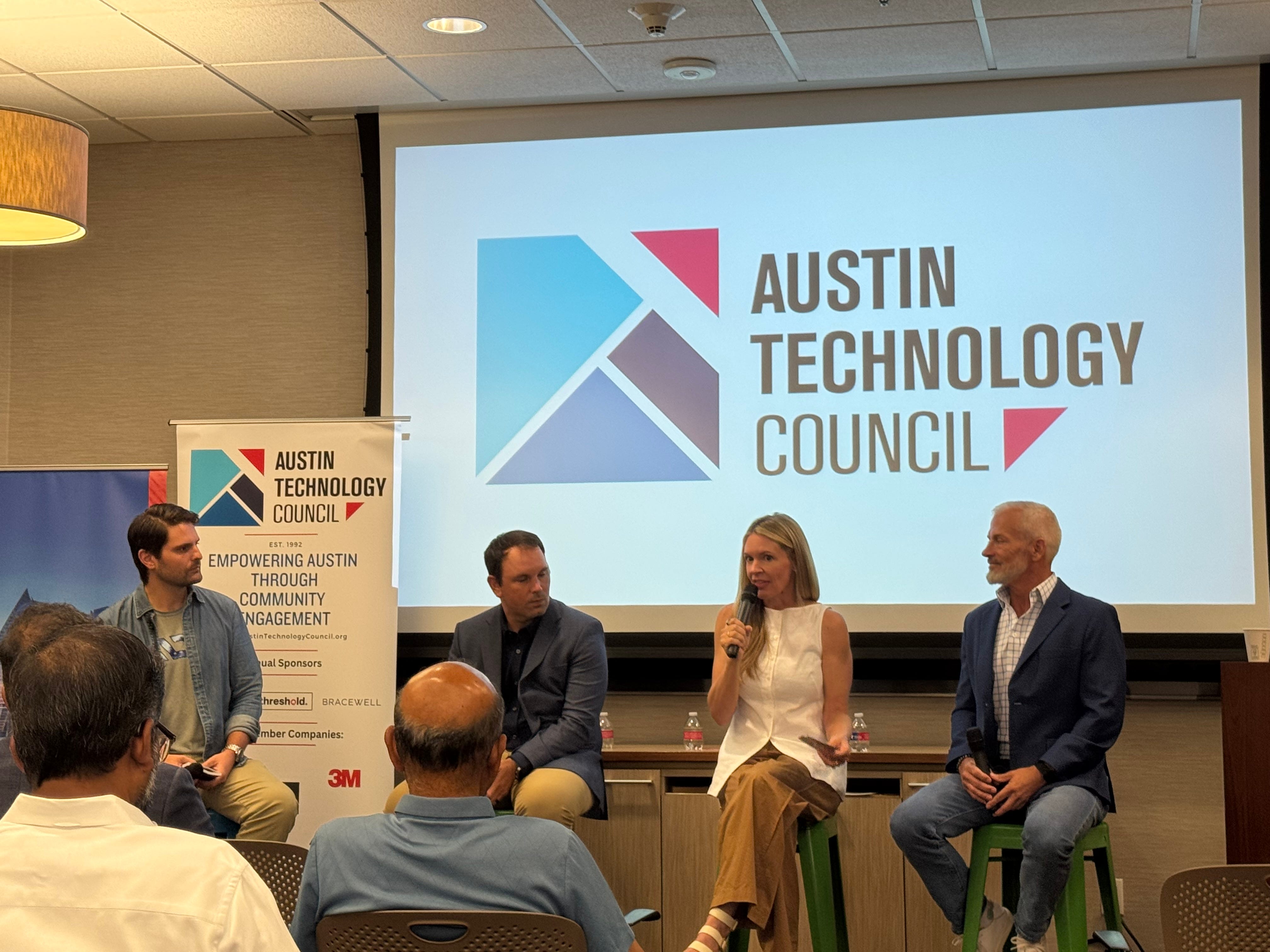
That’s the “Trust Wall” I described at the Austin Technology Council in June, seen from the other side. A warm introduction gets you over the wall. Your reputation decides whether anyone wants you there once you land.
And speaking of the Austin Technology Council. If you’re in the area, go to their breakfasts when you can. If you’re not, find the equivalent in your town, a technology council that is hosting real conversations without the emotion and the political division.
At yesterday’s breakfast, Brooke Hovey of KUNGFU.AI, a local AI company, said that in the era of AI and its onslaught, she appreciates the human side even more.
So do I. In fact, I wrote on LinkedIn this week that large platforms like LinkedIn, Facebook and others, which make money by letting people send unsolicited spam and outreach, ought to share some of that revenue with the people being targeted. You can join in and add your thoughts to that conversation here.
So what do you do about it?
People ask me for practical takeaways, so here are mine:
If you’re building something, start with who wants it. If it’s just for you, great. If you hope to make it a business, make sure folks really need it or want it. The building part is getting cheap. Finding the person who will actually use your left-handed football bat is not.
If you’re looking for work, be curious out loud. Your public trail is part of your resume now, whether you like it or not.
If you’re hiring, stop making excuses for the brilliant jerk. You have options you didn’t have five years ago.
It’s going to be a harsh world for the non-curious, dull jerks. But for anyone willing to see a problem and go fix it, there has never been a better time. Mrs. Grevious would have had a field day with this.
So let me ask you. What would you build if trying it cost you nothing but a weekend? Hit reply and tell me. I read every one.
Take care,
Joseph
Joseph
Co-Founder, USTomorrow.us
Joseph Kopser Co-Founder, USTomorrow.us
Joseph Kopser is a lifelong problem solver committed to building the teams needed to take on our toughest challenges. He is currently President of Grayline after he co-founded and served as CEO of RideScout, before it was acquired by Mercedes. He served in the U.S. Army for 20 years earning the Combat Action Badge, Army Ranger Tab and Bronze Star. He is a graduate of West Point with a BS in Aerospace Engineering and also received a Masters from the Harvard Kennedy School and former member of the Army Science Board. He was recognized as a White House Champion of Change for his efforts in Energy and Transportation as well as won the U.S. DOT Data Innovation Award. He co-authored the book, Catalyst, a book focused on helping teams adapt to change. He is the Chair of the Board of Advisors for the CleanTX, an economic development and professional association for energy innovation. In 2025, Joseph was selected for the Texas Business Hall of Fame Future Texas Business Legend Award. Joseph and his wife of 31 years, Amy, live in Austin and they are extremely proud of their three adult daughters living their best lives.